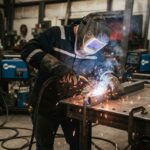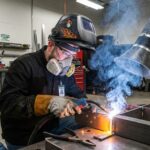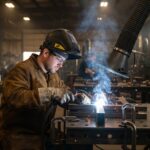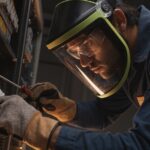

Fire resistant gear protects you from sparks, spatter, UV radiation, and heat during welding, cutting, and grinding. The right gear depends on your process, your environment, and how long you’re exposed to heat each day. Get this wrong, and you risk burns, melted synthetic fabric, or gear that fails right when you need it most.
Most welders learn this lesson the hard way. A jacket that looked tough in the store melts on contact with molten spatter. A pair of “heat resistant” gloves stiffens up and cracks after two weeks of heavy use. This guide walks you through exactly what to look for, so you don’t have to learn by burning through gear (or worse).
We’ll cover materials, ratings, gear categories, and the mistakes that get welders hurt. By the end, you’ll know how to build a kit that matches your actual work, not just what’s cheapest on the shelf.
Understand the Difference Between Flame Resistant and Fire Retardant
Flame resistant (FR) fabric won’t ignite or continue burning once the heat source is removed. Fire retardant refers to a chemical treatment applied to a fabric that isn’t naturally fire resistant, and that treatment can wash out or wear off over time.
This distinction matters more than most buying guides admit. Inherently FR fabrics, like treated cotton or aramid blends, keep their protective properties for the life of the garment. Chemically treated fabrics lose effectiveness after repeated washing, UV exposure, or heavy wear. If your gear sees daily use, inherent FR materials are worth the extra cost.
Common Fire Resistant Materials Used in Welding Gear
- Leather – Naturally resists sparks and spatter. Doesn’t melt, but can dry out and crack without proper care.
- Treated cotton (FR cotton) – Comfortable and breathable, good for lighter work, but less durable against sustained heat than leather.
- Aramid fibers – Synthetic fibers engineered to resist heat and flame without melting. Common in premium welding jackets and gloves.
- Denim or duck canvas – Offers basic spark protection for casual or light-duty tasks, but isn’t a substitute for true FR gear on heavy jobs.
Avoid anything made from polyester, nylon, or other synthetic blends unless it’s specifically rated FR. These fabrics melt onto skin when exposed to sparks, which causes far worse burns than fabric that simply chars.
Check for Recognized Safety Ratings Before You Buy
Gear without a recognized safety rating is a guess, not protection. In the US, look for compliance with NFPA 2112 (flame resistant clothing) or ANSI/ISEA standards for eye and face protection. For gloves, check for ratings under ANSI/ISEA 105 for cut and heat resistance.
These ratings exist because independent testing bodies verify the claims manufacturers make. A jacket labeled “fire resistant” with no certification number attached could mean almost anything. A jacket certified to NFPA 2112 has passed specific vertical flame tests, so you know exactly what protection you’re getting.
Don’t take a product listing’s word for it. Search the manufacturer’s spec sheet or product tag for the actual standard number, not just marketing language like “heat resistant” or “flame retardant.” If a seller can’t point you to a certification, treat that as a red flag.
Essential Gear Categories for Complete Thermal & Respiratory Protection
Building a complete protective kit requires full-coverage defense across every area exposed to extreme radiant heat, high-temperature spatter, and intense ultraviolet light because missing even a single piece creates a dangerous vulnerability that stray sparks will inevitably exploit. While investing in premium personal protective equipment reliably shields your skin and body from thermal hazards and flying debris, thermal defense accounts for only half of your workshop safety. Integrating high-grade personal protection with effective strategies to avoid dangerous welding metal fumes while working guarantees your respiratory health remains just as well-safeguarded as your body.
Welding Jackets and Bibs
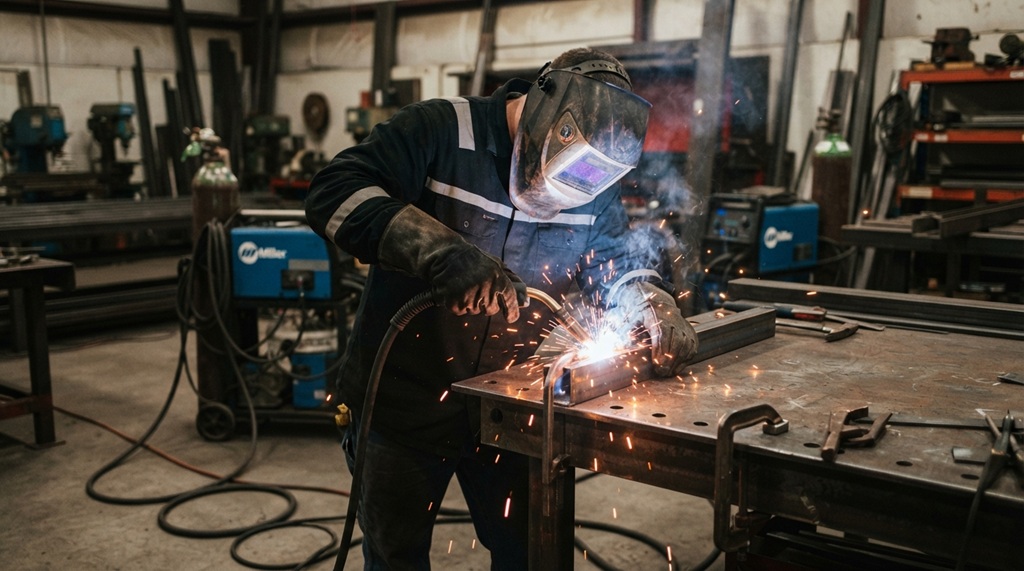
A quality welding jacket should extend past your waist and have a high collar to protect your neck. Leather jackets suit heavy structural welding and overhead work, while FR cotton jackets work well for lighter fabrication in warmer shops. Bibs or aprons add extra coverage for seated or bench work.
Gloves Matched to Your Welding Process
TIG welding needs thinner, more dexterous gloves for precise control. MIG and stick welding call for thicker, more insulated gloves since you’re handling more heat and heavier spatter. Buying the wrong glove type for your process either sacrifices dexterity or leaves your hands underprotected.
Eye and Face Protection
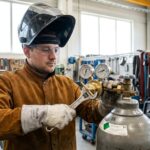
A welding helmet with the correct shade lens protects against arc flash and UV radiation, and auto-darkening lenses reduce neck strain from constantly flipping a fixed shade. Safety glasses underneath your helmet add a second layer of protection against grinding debris once the helmet is lifted.
Footwear Built for the Shop Floor
Leather boots with no exposed stitching resist spark penetration far better than boots with mesh panels or synthetic uppers. Look for boots rated for electrical hazard protection if you’re working near live circuits, and choose a pull-on style without laces so sparks can’t lodge in the eyelets.
Match Your Gear to Your Specific Welding Process
Different welding processes throw different levels of heat and spatter, so your gear needs to match the job, not just meet a general “welding safe” label.
- MIG welding produces heavy spatter, so thicker leather gear and gauntlet-style gloves hold up best.
- TIG welding produces less spatter but requires precise hand movement, so thinner FR gloves with good dexterity work better.
- Stick welding generates intense heat and heavier spatter, so a full leather jacket and heavy-duty gloves are worth the investment.
- Plasma cutting throws molten metal in a wider radius, so extended coverage on sleeves and pant legs matters more than usual.
If you switch between processes regularly, it’s worth owning two glove types rather than trying to make one pair work for everything. Gear that’s “good enough” for every job usually isn’t ideal for any single one.
Watch for These Warning Signs That Gear Has Failed
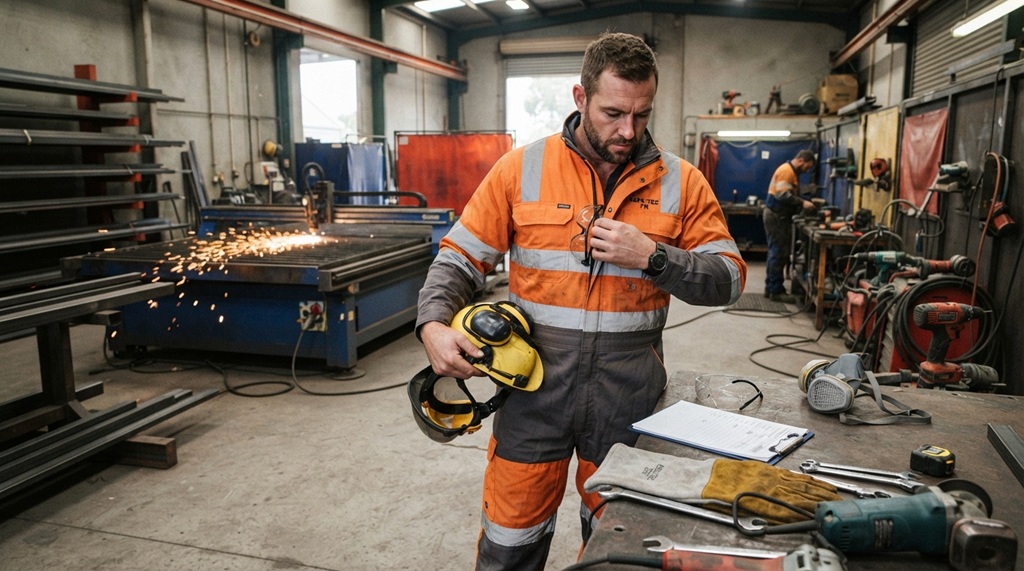
Fire resistant gear degrades over time, and worn-out gear can fail exactly when you need it most. Inspect your gear regularly, not just when it looks obviously damaged.
Check leather for dryness, cracking, or thinning at high-wear points like the palm of a glove or the elbow of a jacket. Check FR cotton for fraying seams, since weak stitching can let spatter through even if the fabric itself is intact. Replace any gear with holes, even small ones, since a single gap is enough to cause a burn.
One angle most guides skip: gear that’s been washed with regular detergent can lose its FR treatment faster than expected on chemically treated fabrics. Always check the manufacturer’s care instructions, and use FR-specific detergent when required. A jacket that’s technically still in one piece can already be far less protective than it looks.
Avoid These Common Mistakes When Buying Fire Resistant Gear
Even experienced welders make buying mistakes that put safety at risk. Here are the ones that come up most often.
- Buying based on price alone. Cheap gear often uses untreated or lightly treated fabric that won’t hold up under real welding heat.
- Skipping certification checks. A product page that says “flame resistant” without a listed standard isn’t proof of anything.
- Wearing synthetic base layers under FR gear. A synthetic shirt underneath can melt even if your outer jacket is fully rated.
- Ignoring fit. Gear that’s too loose can catch on equipment, while gear that’s too tight restricts movement and increases fatigue.
- Using the same gloves for every process. As covered above, TIG, MIG, and stick welding each call for a different glove design.
Avoiding these mistakes costs nothing beyond a little research time, and it’s the difference between gear that actually protects you and gear that just looks the part.
Frequently Asked Questions
Is FR-rated clothing the same as flame-proof clothing?
No. FR-rated clothing resists ignition and self-extinguishes once the heat source is removed, but it isn’t flame-proof. No fabric offers complete immunity to fire, so proper technique and shop safety practices still matter alongside your gear.
Can I wear regular cotton clothing while welding?
Untreated cotton can catch fire and continue burning, unlike FR-treated cotton, which is engineered to self-extinguish. Regular cotton offers some spark resistance compared to synthetics, but it isn’t a substitute for certified FR gear on any serious welding job.
How often should I replace welding gloves?
Replace gloves as soon as you notice thinning material, holes, or stiffness that affects grip, since damaged gloves lose their protective properties fast. Heavy daily users often replace gloves every few months, while occasional welders may get a year or more from a quality pair.
Do I need different gear for indoor versus outdoor welding?
Outdoor welding often adds wind and UV exposure on top of standard spark and heat risks, so consider gear with added UV protection for prolonged outdoor work. Indoor shops with less airflow may also call for more breathable FR fabric to manage heat buildup during long sessions.
What’s the most overlooked piece of fire resistant gear?
Ear protection and neck coverage are the pieces welders skip most often, even though sparks frequently land in collar gaps or bounce toward exposed ears. A high-collar jacket paired with a welding cap that covers the ears closes this gap cheaply and effectively.
Final Thoughts
Choosing fire resistant gear for metalwork comes down to matching real materials, real ratings, and real process demands to the work you actually do. Skip the guesswork on fabric claims, check for genuine safety certifications, and replace gear the moment it shows wear. A well-matched kit doesn’t just check a safety box it lets you work longer, more comfortably, and with real confidence that your gear will hold up when it matters.