

Welding metal fumes contain fine particles and gases that can damage your lungs, nervous system, and long-term health. You avoid them by improving ventilation, wearing the right respiratory protection, and controlling fume sources at the point they form. This isn’t optional gear-shop advice it’s the difference between a career that lasts decades and one cut short by chronic illness.
Most welders know fumes are “bad for you.” Fewer understand which metals produce the most dangerous fumes, how quickly exposure adds up, or which control actually works versus which one just feels like it works. This guide breaks down the real risks and the practical steps that reduce them, whether you’re in a home shop or a busy fabrication floor.
We’ll cover ventilation setups, PPE choices, specific dangers by metal type, and workspace habits that cut your exposure without slowing down your work.
Why Welding Fumes Are More Dangerous Than They Look
Welding fumes are dangerous because they’re made of ultra-fine metal particles small enough to lodge deep in your lungs, not just settle in your throat like dust. When metal is heated past its boiling point, it vaporizes and then rapidly cools into airborne particles smaller than one micron. Particles that small bypass your body’s natural filtering system and reach the deepest part of your lungs.
According to industry experts and occupational health researchers, long-term exposure to welding fumes has been linked to lung damage, reduced lung function, and increased risk of certain cancers. Some fumes also carry heavy metals like manganese, which has been associated with neurological symptoms resembling Parkinson’s disease after years of unprotected exposure.
The danger isn’t always obvious in the moment. You might not cough or feel irritation during a session, especially if you’re used to the smell. That doesn’t mean the exposure isn’t happening it means the damage is cumulative and often silent until years later.
Ventilation: Your First and Most Important Line of Defense
Proper ventilation removes fumes from your breathing zone before you inhale them, and it works better than any respirator alone. Relying on a mask without addressing airflow just means you’re fighting a losing battle against a constant fume source.
Local Exhaust Ventilation (LEV)
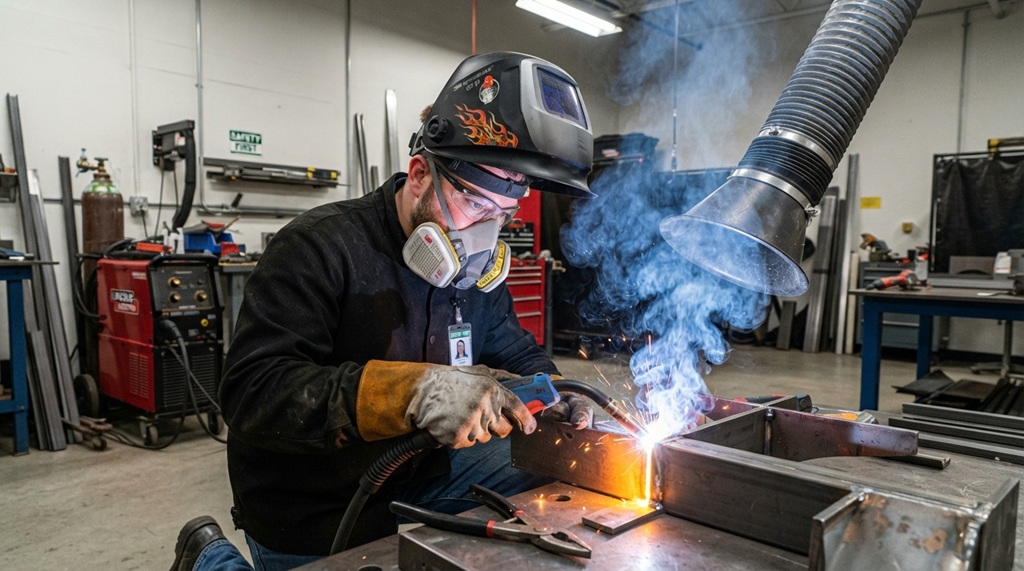
Local exhaust systems, like fume extraction arms or downdraft tables, capture fumes right at the source. Position the extraction nozzle within 6 to 8 inches of the arc for the best capture rate. Even a few extra inches of distance can cut effectiveness dramatically, since fume plumes disperse fast.
General Room Ventilation
General ventilation dilutes fume concentration across the whole workspace but doesn’t eliminate the source. It works well as a backup to local exhaust, not as a replacement for it. If you’re welding in an enclosed space with no LEV, open doors, use fans to direct airflow away from your face, and never assume “it feels breathable” means the air is safe.
Confined Space Considerations
Confined spaces like tanks, pipes, or small rooms trap fumes and can quickly create dangerous concentrations. Use supplied-air respirators in these situations rather than standard filtering facepieces, and never weld in a confined space alone. A second person should monitor from outside and know how to respond if you show signs of distress.
Choosing the Right Respiratory Protection
The right respirator depends on the metal you’re welding, the ventilation you have, and how long you’ll be exposed. A basic dust mask is not adequate for welding fumes it’s designed for particulates, not the fine metal fume particles and gases welding produces.
When a Powered Air-Purifying Respirator (PAPR) Makes Sense
PAPRs filter air and push it into your hood under positive pressure, which reduces the chance of unfiltered air leaking in around a poor seal. They’re a strong choice for welders with facial hair, since a tight seal on a standard respirator isn’t possible with a beard.
When You Need Supplied Air
Supplied-air systems deliver breathing air from an external source and offer the highest level of protection. Use them when welding materials that produce highly toxic fumes, such as galvanized steel or stainless steel, especially in poorly ventilated areas.
Matching Filter Cartridges to the Job
Standard particulate filters (rated N95, N99, or P100) handle most general welding fume, but they don’t protect against gases like ozone or nitrogen oxides. If you’re working with processes that generate significant gas byproducts, pair a particulate filter with an organic vapor or gas cartridge, or switch to supplied air.
Metal-Specific Fume Hazards You Need to Know
Not all welding fumes carry the same risk, and knowing what you’re welding matters as much as how you’re welding it.
Galvanized Steel and Zinc Fumes
Welding galvanized steel releases zinc oxide fumes, which can cause metal fume fever a flu-like illness with chills, fever, and muscle aches that typically appears hours after exposure. It’s usually temporary, but repeated episodes suggest your controls aren’t adequate and need improvement.
Stainless Steel and Hexavalent Chromium
Stainless steel welding produces hexavalent chromium, a substance classified as a known human carcinogen. This is one of the more serious fume hazards in welding, and it demands strict ventilation and respiratory protection, particularly during processes like TIG and MIG welding on stainless materials.
Manganese in Mild Steel
Mild steel welding still produces manganese-containing fumes. Long-term overexposure has been linked to neurological effects, sometimes called “manganism,” with symptoms that can resemble Parkinson’s disease. Because mild steel welding is so common, this risk is often underestimated simply due to familiarity.
Painted or Coated Surfaces
Welding over paint, primer, or other coatings can release additional toxic compounds, including lead if older paint is involved. Always grind coatings back to bare metal before welding whenever possible, and never assume a coating is “probably fine” without checking.
Ergonomic Positioning and Motion Control for Fume Reduction
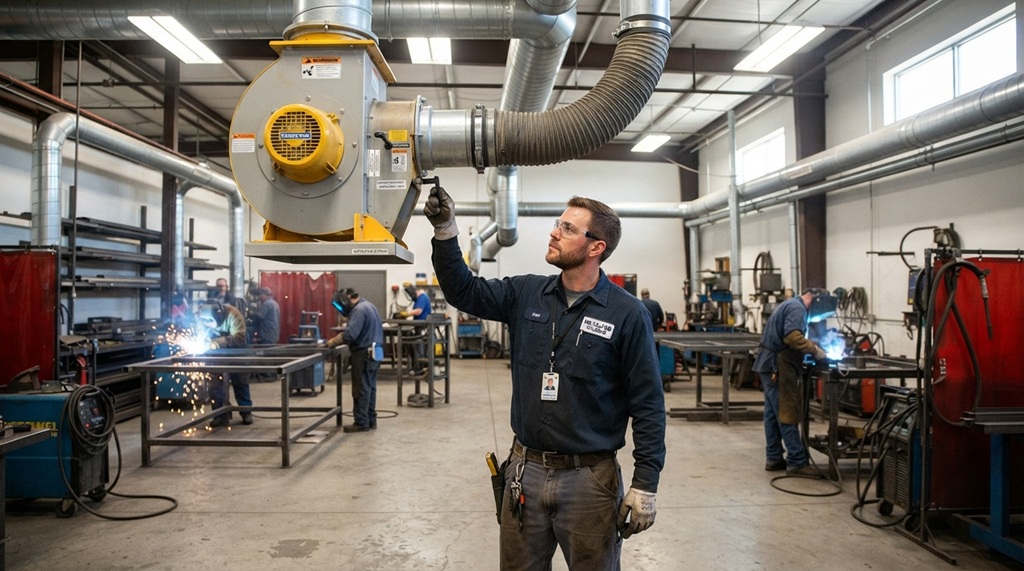
Optimizing your physical positioning and body mechanics during a weld is one of the most effective, zero-cost ways to reduce direct fume inhalation. By maintaining a clean line of sight while staying clear of the rising plume and positioning portable extraction hoods upwind of your arc you naturally divert toxic particulate matter away from your breathing zone, ensuring safer daily operations alongside your primary shop ventilation strategy for safe indoor welding.
Position Your Body Correctly
Keep your head out of the fume plume, which naturally rises straight up from the weld puddle. Many welders unconsciously lean directly over their work, putting their face right in the rising fume column. Adjust your stance so fumes rise past your shoulder, not your face.
Take Genuine Breaks in Clean Air
Step into fresh air during breaks rather than lingering in a fume-filled shop. Your lungs get a chance to clear some particulate load, and it’s a good habit to build even on days when the air “seems fine.”
Keep Your Equipment Maintained
A poorly maintained fume extractor loses suction efficiency over time as filters clog. Check and replace filters on a regular schedule, and don’t wait until airflow noticeably drops to address it by then, you’ve likely been breathing more fume than you realize.
Rotate Tasks When Possible
If your shop allows it, rotating welding tasks with non-welding tasks throughout the day reduces total exposure time for any one person. This is a practical, often-overlooked strategy in busier shops where the same person handles continuous welding for entire shifts.
Building a Long-Term Fume Safety Routine
Consistent, boring habits protect you more than occasional intense precautions. A single good ventilation day doesn’t undo months of poor practices, and a single skipped precaution on a “quick job” adds real risk even if nothing happens that day.
Make respirator checks part of your daily setup, not an afterthought you grab when you remember. Inspect seals, replace cartridges on schedule, and treat your PPE like safety equipment, not a formality. Document any symptoms you notice, even mild ones like headaches or irritation, and bring them up with a doctor familiar with occupational exposure if they persist.
Shops that build fume control into their standard workflow, rather than treating it as extra effort, see fewer long-term health issues among their welders. That’s not a coincidence it’s what consistent exposure reduction actually looks like in practice.
FAQ
What are the symptoms of welding fume exposure?
Short-term symptoms can include throat and eye irritation, coughing, dizziness, and metal fume fever, which causes flu-like chills and fever. Long-term exposure is linked to reduced lung function, neurological symptoms, and increased cancer risk depending on the metals involved. Symptoms don’t always appear immediately, so absence of symptoms doesn’t mean exposure is safe.
Can a regular dust mask protect me from welding fumes?
No, a standard dust mask isn’t designed to filter the fine metal particles and gases produced by welding. You need a respirator rated for welding fume, such as an N95, N99, P100, or a PAPR system, matched to the specific metals you’re working with. For high-risk metals like stainless steel, supplied air is often the safer choice.
Is MIG welding more dangerous than TIG welding for fume exposure?
MIG welding generally produces more fume volume than TIG welding because of the continuous wire feed and higher deposition rate. TIG welding produces less visible fume but can still generate hazardous fumes, especially on coated or alloyed metals. Ventilation and PPE requirements should be based on the metal and process combined, not the process alone.
How close should fume extraction be to my weld?
Fume extraction should sit within about 6 to 8 inches of the arc for effective capture. Moving it further away significantly reduces how much fume the system actually pulls in, since fume plumes disperse quickly into the surrounding air. Adjust the extractor position as you move along your weld path rather than leaving it fixed.
Do I need special precautions for welding galvanized steel?
Yes, welding galvanized steel releases zinc oxide fumes that can cause metal fume fever, a temporary but unpleasant flu-like illness. Use strong local ventilation, wear appropriate respiratory protection, and consider grinding off the galvanized coating in the weld area beforehand when practical. Repeated metal fume fever episodes are a signal to strengthen your fume controls.
Conclusion
Avoiding dangerous welding fumes comes down to three consistent habits: strong local ventilation, respiratory protection matched to the metal you’re welding, and workspace positioning that keeps fume plumes away from your face. None of these require expensive equipment overhauls they require consistency. Build them into your routine the same way you’d check your welding settings or inspect your PPE, and you protect your long-term health without sacrificing the work you do every day.