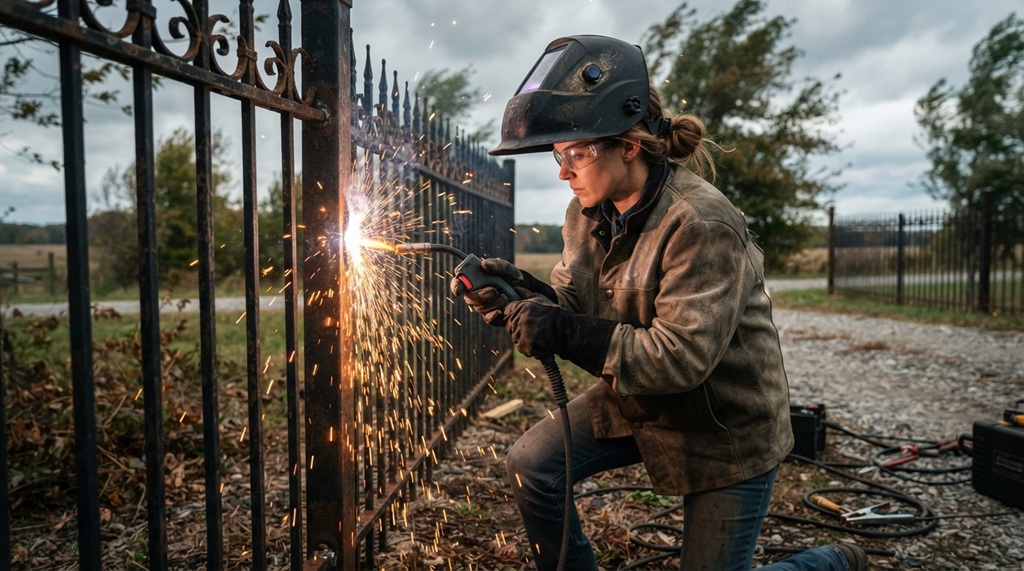

You can flux core weld outdoors without gas because the process makes its own shielding. The flux inside the wire burns and creates a gas cloud that protects your weld puddle. No tank, no regulator, no hose to babysit in the wind.
This is why flux cored arc welding (FCAW) is the go-to choice for job sites, farms, and repair work outdoors. Gas-shielded processes like MIG fail in wind because the shielding gas blows away before it can protect the puddle. Flux core doesn’t have that problem.
But “no gas needed” doesn’t mean “no skill needed.” You still need the right wire, the right settings, and a few habits that keep your welds clean. This guide walks through all of it.
Why Flux Cored Welding Works Without Shielding Gas
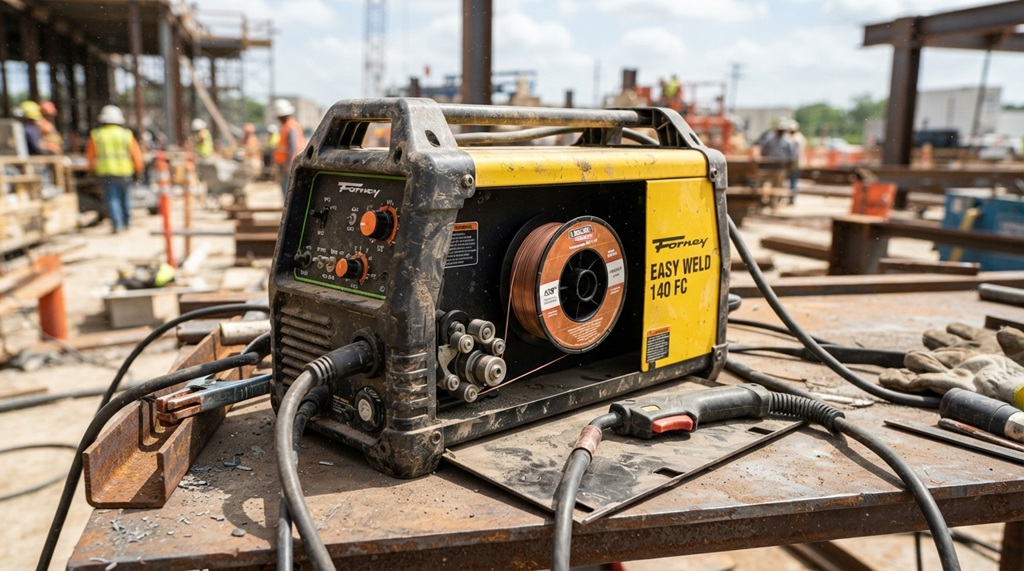
Flux cored welding works outdoors without gas because the wire itself carries the shielding agent. As the wire melts, the flux core burns and releases a gas shield around the arc. This shield protects the molten puddle from oxygen and nitrogen in the air.
This is different from solid MIG wire, which needs an external gas tank to create that same protection. Take away the gas on a MIG setup, and your welds turn porous and weak almost instantly.
The Self-Shielded Advantage
Self-shielded flux core wire (often labeled FCAW-S) is built for exactly this job. It doesn’t need gas at all, indoors or out. That makes it the standard choice for outdoor construction, pipeline work, and agricultural repairs.
Gas-shielded flux core wire (FCAW-G) also exists, but it still needs a gas tank. If you want true gasless welding outdoors, self-shielded wire is what you want.
Choosing the Right Flux Cored Wire for Outdoor Use
Pick a self-shielded flux cored wire like E71T-11 or E71T-GS for most outdoor jobs. These wires are designed to run without gas and handle mild wind without much trouble.
Common Wire Types and Their Uses
- E71T-11: The most popular choice for beginners and general repair work. Runs well on thinner metal and handles some rust or mill scale.
- E71T-GS: A lighter-duty option, best for thin sheet metal and single-pass welds. Not rated for structural work.
- E70T-4 and E70T-7: Heavier-duty wires used in structural and pipeline welding. These need more amperage and a stronger machine.
Wire Diameter Matters
Thicker wire (0.045″ or 0.052″) handles outdoor conditions better than thin wire (0.030″). Thicker wire runs hotter and produces a stronger arc, which helps push through wind and minor contamination on the metal surface. If you weld outdoors often, size up.
Best Machine Settings for Outdoor Flux Core Welding
Set your voltage and wire speed slightly higher than you would indoors, then fine-tune based on your bead. Outdoor conditions often call for a hotter arc to fight wind and keep the puddle stable.
Starting Point Settings
For 0.045″ E71T-11 wire on 1/4-inch steel, start around 18-20 volts and 250-280 inches per minute (IPM) wire speed. Adjust from there based on your machine’s chart and the metal thickness you’re welding.
Watch Your Bead, Not Just the Numbers
A good outdoor flux core bead looks slightly convex with tight, consistent ripples. If you see excess spatter or a flat, wide bead, your settings are probably too hot. If the bead looks rope-like and doesn’t tie into the base metal, turn up the heat.
Polarity Setting
Self-shielded flux core wire runs on DCEN (straight polarity), which is the opposite of most MIG setups. Check your machine’s polarity before you strike an arc. Running the wrong polarity causes excessive spatter and a weak, porous weld.
How to Block Wind Without Killing Your Shielding
Reduce wind speed at the weld joint using a physical barrier, not by cranking up your gas flow (since there isn’t any). Because flux core doesn’t rely on external gas, wind has less effect on it than MIG. But strong gusts can still disturb the arc and cause a rougher bead.
Simple Windbreak Options
- Welding blankets or tarps: Hang them around the work area to cut direct wind exposure.
- Portable welding screens: Fold-out screens work well for job sites and give you flash protection too.
- Vehicle or structure positioning: Park a truck or work near a wall to create a natural wind block.
Industry experts generally agree that self-shielded flux core can handle wind speeds up to around 20-30 mph without major issues, though this depends on your specific wire and settings. Beyond that range, even flux core benefits from some kind of shield.
Common Outdoor Flux Core Pitfalls and How to Fix Them
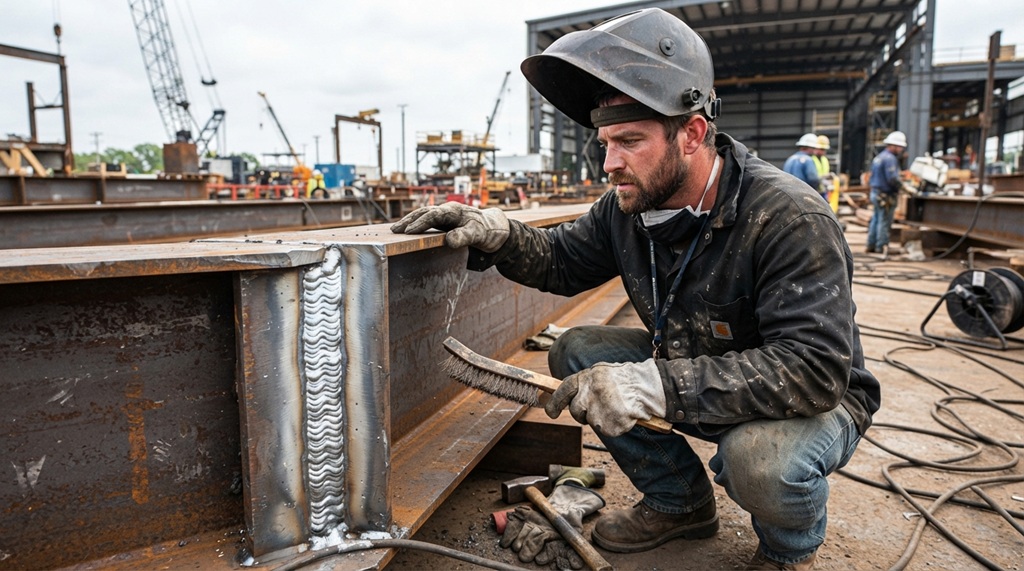
Most outdoor flux core issues trace back to surface contamination, flawed torch technique, or incorrect machine parameters, but systematically adjusting your setup will resolve them quickly. Start by thoroughly grinding away rust, mill scale, and paint from your base metal, as surface debris is the leading cause of internal porosity and weak penetration. Pay close attention to your stick-out length and angle; maintaining a drag technique with a consistent quarter-to-half-inch electrode extension prevents spatter and ensures a stable arc even in high-wind conditions. However, when your project demands deeper fusion than self-shielded wire can provide, upgrading your process is essential. While gasless flux core excels at thin-to-medium outdoor fabrications, tackling heavy structural steel, thick plate, or load-bearing joints requires maximum root penetration master stick welding on thick structural steel to guarantee structurally sound, high-stress welds.
Porosity (Small Holes in the Weld)
Porosity usually means something is disrupting your shielding gas cloud. Check for rust, oil, or moisture on the base metal first, since these are the most common causes outdoors. Clean the joint with a wire brush or grinder before you weld.
Excessive Spatter
Excessive spatter often points to the wrong polarity or too much voltage. Double-check that your machine is set to DCEN, then dial your voltage down slightly and test again on scrap metal.
Poor Arc Stability in Wind
Poor arc stability in strong wind means your shielding cloud is getting blown away faster than the wire can replace it. Add a windbreak, angle your gun away from the wind direction, or shorten your stick-out to help the shield stay put.
Cracking or Weak Welds
Cracking often comes from welding too fast or not preheating thicker metal in cold weather. Slow your travel speed down and, on thick or cold steel, warm the joint slightly before you start.
Safety Tips for Outdoor Flux Core Welding
Wear the same core safety gear you’d use indoors, plus extra protection for sun, wind, and uneven ground. Outdoor conditions add risks that shop welding doesn’t have.
Key Safety Reminders
- Eye and skin protection: UV rays are stronger outdoors, so cover exposed skin even on hot days.
- Fire watch: Dry grass and debris ignite easily from sparks. Clear the area and keep a fire extinguisher nearby.
- Stable footing: Uneven ground increases trip risk while you’re holding a hot gun and cables. Set up on flat, dry ground when you can.
- Ventilation: Flux core produces more smoke than MIG. Position yourself so the wind carries fumes away from your face, not toward it.
Frequently Asked Questions
Can you flux core weld in heavy rain?
No, you should not weld in rain or on wet metal. Water creates a shock hazard and causes porosity in the weld. Wait for dry conditions or move under cover before you strike an arc.
Does flux core welding need gas at all?
Self-shielded flux core wire (FCAW-S) never needs gas, indoors or outdoors. Gas-shielded flux core wire (FCAW-G) does need a gas tank, so check your wire type before assuming you’re gasless.
What’s the maximum wind speed for flux core welding?
Most self-shielded flux core wire holds up in wind up to around 20-30 mph, according to industry experience. Above that, use a windbreak or screen to protect your arc and get a cleaner weld.
Is flux core welding weaker than MIG welding?
Flux core welding is not inherently weaker than MIG welding. With the right wire and settings, it produces welds strong enough for structural work, pipelines, and heavy equipment repair.
Why does my outdoor flux core weld look rough compared to indoor welds?
Wind, cold metal, and outdoor debris all affect bead appearance more than they affect strength. Clean your metal well, block major wind, and adjust your settings, and your bead should tighten up.
Conclusion
Flux core welding is built for outdoor work because it doesn’t depend on gas that wind can blow away. Pick a self-shielded wire like E71T-11, set your machine to DCEN, and dial in your voltage and wire speed for the metal you’re working. Add a simple windbreak on gusty days, keep your base metal clean, and you’ll get strong, clean welds outdoors every time.