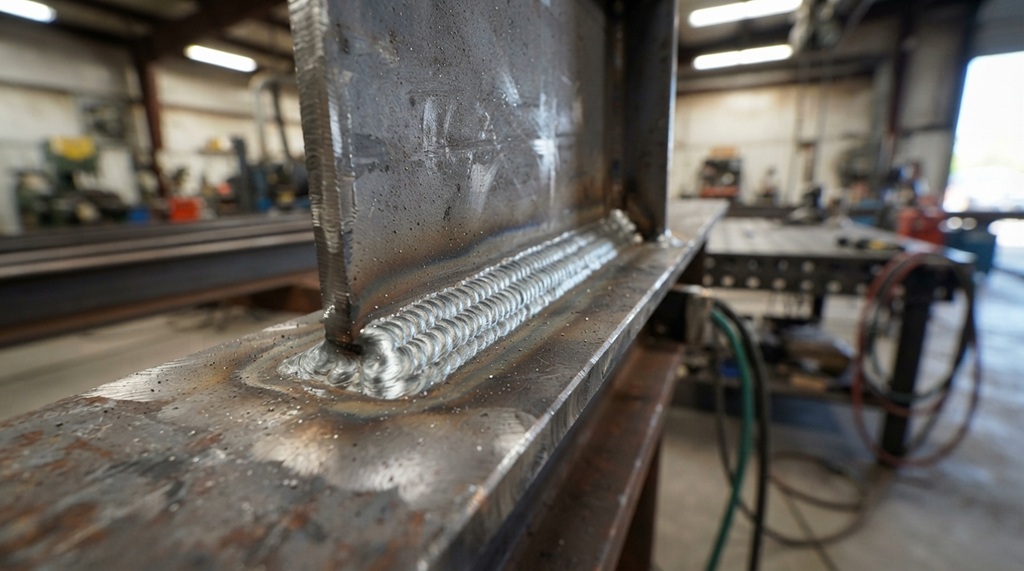

Stick welding thick structural steel comes down to three things: the right electrode, enough amperage, and proper joint prep. Skip any one of these, and you risk cold lap, poor penetration, or a weld that fails under load. Structural steel usually means plate or beam material over 3/8 inch thick, and it demands more heat and control than thin sheet metal.
Most welders struggle here because they carry over habits from thin-gauge work. Thick steel pulls heat away fast. It needs a different approach to travel speed, rod angle, and pass sequence. This guide breaks down exactly what changes.
We’ll cover electrode selection, machine settings, joint prep, technique, and common mistakes. By the end, you’ll have a clear plan for your next structural job.
Choosing the Right Electrode for Thick Structural Steel
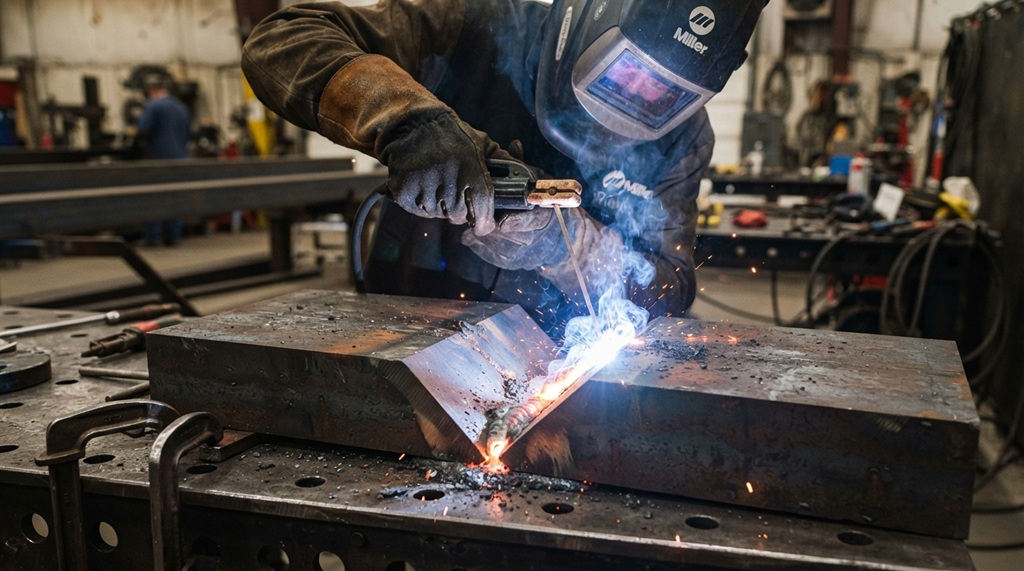
For thick structural steel, low-hydrogen electrodes like E7018 are the industry standard. They produce strong, ductile welds with fewer hydrogen-induced cracks, which matters most on thick sections where cracking risk goes up.
E7018 vs E6010 for Structural Work
E7018 gives you a smooth, controlled arc and a dense weld bead. Most codes and welding procedures for structural steel call for it, especially on anything load-bearing. It runs best on AC or DC reverse polarity.
E6010 digs deeper and works well for root passes, especially on pipe or dirty, rusty steel. Many welders run a 6010 root pass, then switch to 7018 for fill and cap. This combo gives good penetration up front and strong, clean cover passes on top.
Rod Diameter and Amperage Matching
Thicker steel needs a thicker rod. A 1/8-inch (3.2mm) 7018 rod works fine for material up to about 1/2 inch. Beyond that, step up to 5/32-inch or 3/16-inch rods to get enough heat into the joint without excessive passes.
Match your amperage to the rod size. A 1/8-inch 7018 typically runs between 90 and 140 amps. A 5/32-inch rod usually needs 140 to 200 amps. Always check the specific electrode manufacturer’s chart, since brands vary slightly.
Setting Your Machine for Deep Penetration
Your amperage should sit toward the higher end of the electrode’s rated range when welding thick steel. Low amperage on thick material causes poor fusion and a weak, humped bead that sits on top of the joint instead of tying into it.
Run a test bead on scrap first. Watch the arc sound: a sharp, crisp crackle usually means good penetration. A soft, quiet arc often means your amps are too low. Adjust in small steps, five to ten amps at a time, until the bead flows evenly and the sound stays consistent.
Polarity matters too. Most low-hydrogen rods run on DC reverse polarity (electrode positive) for a stable arc and deeper penetration. Check your machine and rod manufacturer’s guidelines before you start.
Preparing the Joint Before You Weld
Proper joint prep matters as much as electrode choice on thick steel. A well-prepped bevel lets heat and filler metal reach the full depth of the joint instead of just bridging the surface.
Beveling and Root Gap
For material over 1/2 inch, a V-groove or double-V bevel is standard. A 30 to 37.5-degree bevel angle on each side, with a root gap of about 1/8 inch, gives the first pass room to fuse into the root without excessive undercut or burn-through.
Grind or plasma-cut the bevel cleanly. Rough or torn edges trap slag and create voids that show up later as porosity or lack of fusion.
Cleaning the Base Metal
Remove mill scale, rust, paint, and oil from the joint area before striking an arc. Contaminants on the surface cause porosity and weak fusion, even with a perfectly set machine. A flap disc or wire wheel works well for this.
Clean at least an inch back from the joint edge on both sides. Heat spreads during welding, and any leftover contamination nearby can still get pulled into the weld pool.
Mastering the Multi-Pass Technique on Thick Structural Steel
Attempting to fill a heavy-gauge joint in a single pass almost guarantees poor fusion, trapped slag, and severe thermal distortion; thick structural steel demands a disciplined multi-pass approach—starting with a precise root pass, followed by intermediate filler passes, and completed with a clean capping pass. While Shielded Metal Arc Welding (SMAW) remains the absolute industry standard for penetrating heavy carbon steel, joining or overlaying dissimilar copper alloys calls for a specialized process: transitioning to aluminum bronze MIG wire yields far superior ductility, joint strength, and long-term corrosion resistance.
Root Pass Fundamentals
The root pass ties the two base metal edges together at the bottom of the joint. Use a slight weave or whip motion, keep a tight arc length, and watch for full penetration through the root gap. Chip and wire-brush the slag completely before moving to the next pass.
Fill and Cap Passes
Fill passes build up the joint to just below the surface. Use a wider weave here, moving side to side with a slight pause at each edge to fuse into the sidewalls. This prevents cold lap at the toes of the weld, one of the most common defects on thick material.
The cap pass finishes the joint flush or slightly crowned above the base metal surface. Slow your travel speed slightly on the cap for a clean, even bead profile.
A tip most guides skip: stagger your pass start and stop points across each layer. If every pass starts and stops in the same spot, you build up a stress concentration at that point, and it becomes a common crack initiation site on thick, highly restrained joints. Shift your starting point by an inch or two on each new pass.
Managing Heat Input and Distortion
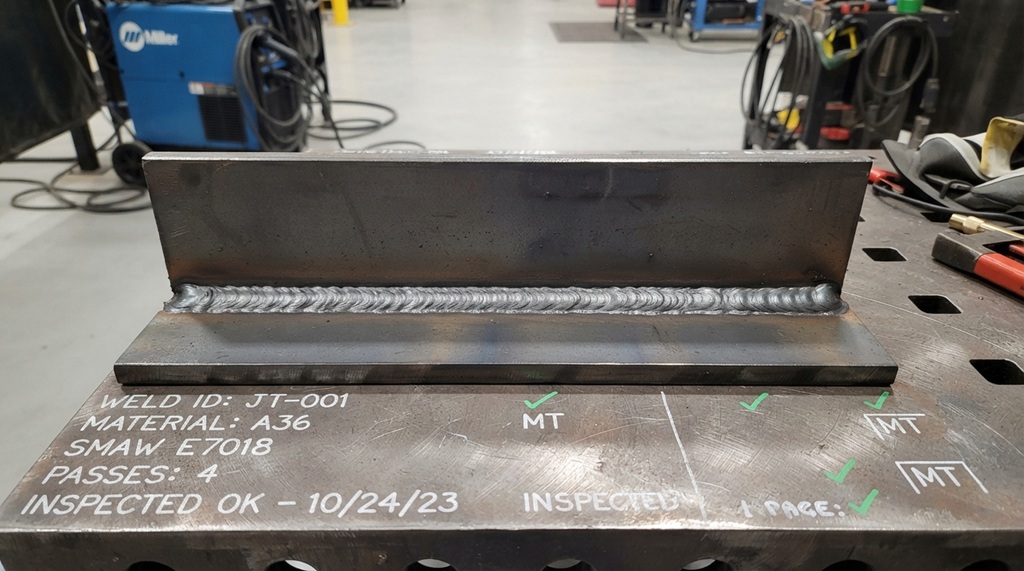
Thick structural steel absorbs a lot of heat, which can cause warping, especially on long seams or fabricated assemblies. Managing heat input keeps your part dimensionally accurate and reduces the risk of cracking from thermal stress.
Preheat thicker sections, generally over 1 inch, especially in cold shop conditions or with higher-carbon steels. Preheating slows the cooling rate and reduces the chance of hydrogen cracking. Check your welding procedure specification (WPS) or a structural engineer’s recommendation for exact preheat temperatures, since they vary by steel grade and thickness.
Use backstep or skip welding sequences on long joints to spread heat input more evenly. Instead of running one continuous bead from one end to the other, weld in short sections in a planned sequence. This reduces cumulative distortion across the whole joint.
Common Mistakes That Weaken Structural Welds
Most weld failures on thick steel trace back to a handful of repeated mistakes. Knowing them ahead of time helps you catch problems before they become structural liabilities.
- Running amperage too low: causes lack of fusion, especially at the sidewalls and root.
- Skipping interpass cleaning: trapped slag between passes leads to porosity and inclusions.
- Rushing travel speed: a bead that’s too fast doesn’t get enough heat into the joint.
- Ignoring preheat requirements: increases the risk of hydrogen-induced cracking on thick sections.
- Poor rod storage: low-hydrogen rods absorb moisture from the air, which raises cracking risk. Store them in a rod oven once opened.
Frequently Asked Questions
What amperage should I use for stick welding 1-inch structural steel?
For a 5/32-inch E7018 rod, most welders run between 160 and 200 amps on material this thick, spread across multiple passes. Always confirm against your specific WPS or the electrode manufacturer’s chart, since actual settings depend on joint design and position.
Do I need to preheat thick steel before stick welding it?
Yes, generally for sections over 1 inch thick or in cold conditions, according to industry experts and most structural welding codes. Preheating reduces the cooling rate and lowers the risk of hydrogen cracking, particularly on higher-carbon or alloy steels.
Can I stick weld structural steel in one pass if it’s thick?
No, thick structural steel almost always needs multiple passes to fill the joint properly. A single pass on thick material leads to poor fusion, trapped slag, and a weak, under-filled joint.
Why do my welds keep cracking on thick steel?
Cracking usually comes from hydrogen contamination, insufficient preheat, or excessive restraint in the joint. Check your rod storage, confirm your preheat temperature, and review your pass sequence to reduce built-up stress.
Is E7018 always the best rod for structural steel?
E7018 is the most common choice for structural work because of its strength and low cracking risk, but it isn’t the only option. Some welders prefer an E6010 root pass on dirty or gapped joints before switching to E7018 for the fill and cap passes.
Final Thoughts
Mastering stick welding on thick structural steel comes down to matching your electrode and amperage to the material, prepping the joint correctly, and building the weld in controlled, multiple passes. Heat management and clean technique between passes matter just as much as your initial settings.
Practice on scrap plate that matches your real job’s thickness before you commit to the actual structure. Small adjustments in amperage, travel speed, and pass sequence make a big difference in weld quality and long-term strength.