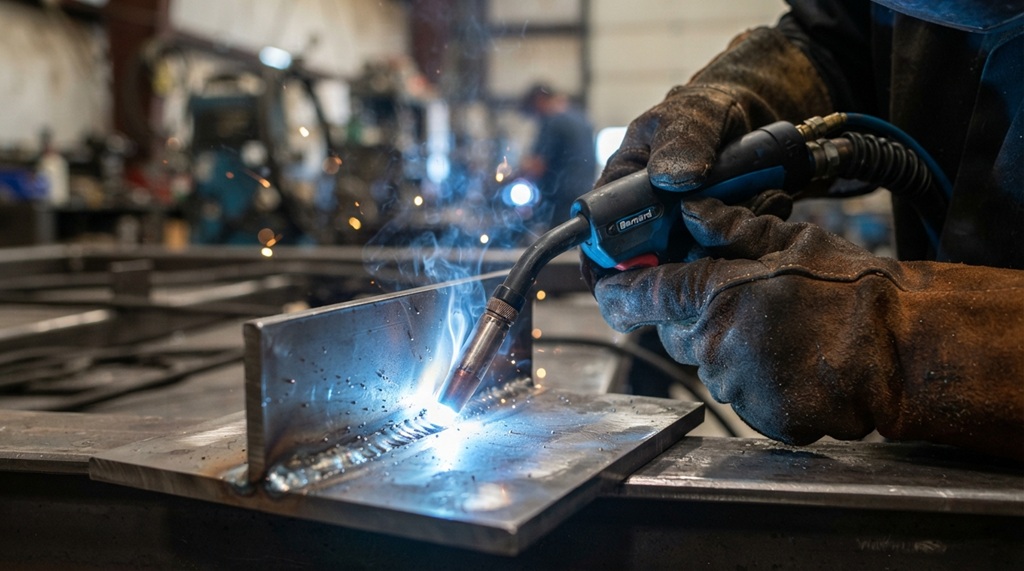

Burnback happens when the arc travels back into the contact tip and melts it to the gas diffuser. The wrong torch tip is one of the most common causes. Pick the right tip size, material, and fit for your wire and amperage, and you cut burnback risk dramatically.
This guide breaks down exactly what to check before you buy or swap a tip. You’ll learn how tip size, wear, and torch angle work together to keep your arc stable. We’ll also cover the setup mistakes that cause most burnback problems in the first place.
Whether you’re running a home shop or working on a production floor, the fix is usually simple once you know what to look for.
What Causes Burnback in the First Place
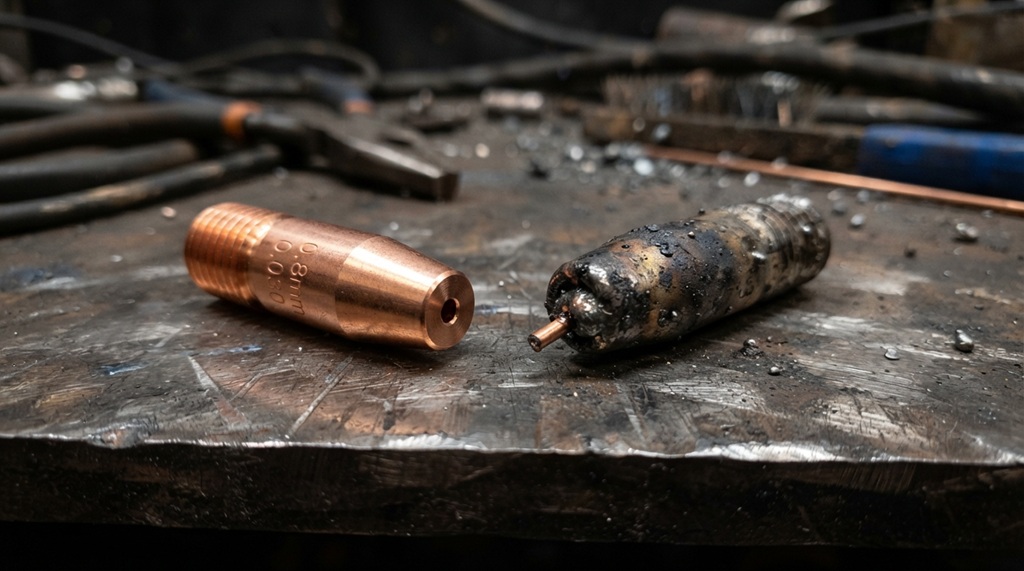
Burnback happens when the wire fuses to the contact tip instead of feeding through it smoothly. This usually points to a mismatch between the tip and your wire, gas, or amperage settings.
Here are the most common triggers:
- Wrong tip size. A tip bore that’s too large lets the wire wander and arc inside the tip.
- Worn-out tip. A tip with an enlarged or oval bore can’t guide the wire straight anymore.
- Wire feed problems. Bent liners, dirty drive rolls, or excess friction slow the wire down at the tip.
- Too much stickout. Extending the wire too far from the tip increases resistance and heat buildup.
- Poor torch angle. Dragging the torch at a steep angle changes how the arc behaves at the tip.
Most of these issues trace back to one root cause: the wire isn’t feeding at a steady, predictable rate through the tip. Fix the feed, and you fix most burnback.
How to Match Torch Tip Size to Your Wire Diameter
The tip’s bore size must match your wire diameter almost exactly, with just enough clearance for smooth feeding. Too tight, and the wire drags. Too loose, and it wanders and arcs inside the tip.
Most manufacturers stamp the wire size directly on the tip (like 0.030 or 0.035). Always match that number to the wire spool you’re running. Don’t assume tips are interchangeable across wire sizes just because they look similar.
Standard Sizing Guidelines
- 0.023–0.025 in wire: Use for thin sheet metal and auto body work.
- 0.030–0.035 in wire: The most common range for general fabrication.
- 0.045 in wire: Reserved for thicker plate and higher-amperage jobs.
If you switch wire diameters often, keep a labeled set of tips on hand. Grabbing the wrong tip “because it was close enough” is one of the top causes of avoidable burnback.
Choosing the Right Tip Material for Your Application
Tip material affects how much heat and electrical wear the tip can handle before it needs replacing. Standard copper tips work fine for light, occasional use. Heavier or continuous welding calls for something tougher.
Copper Tips
Copper tips are affordable and conduct electricity well. They’re a solid choice for hobbyists or anyone welding in short bursts with breaks between passes.
Chrome Zirconium Copper Tips
These tips resist heat and wear far better than standard copper. According to industry experts, chrome zirconium tips last significantly longer in high-amperage or high-duty-cycle applications, which reduces how often the bore wears out of spec.
Tungsten-Tipped or Coated Options
Some manufacturers offer coated tips designed for extreme heat resistance. These cost more upfront but can be worth it for production environments running long shifts without downtime for tip changes.
If you’re welding daily at higher amperage, upgrading from basic copper to chrome zirconium copper is often the single biggest burnback reduction you can make.
Checking Amperage Ratings Before You Buy
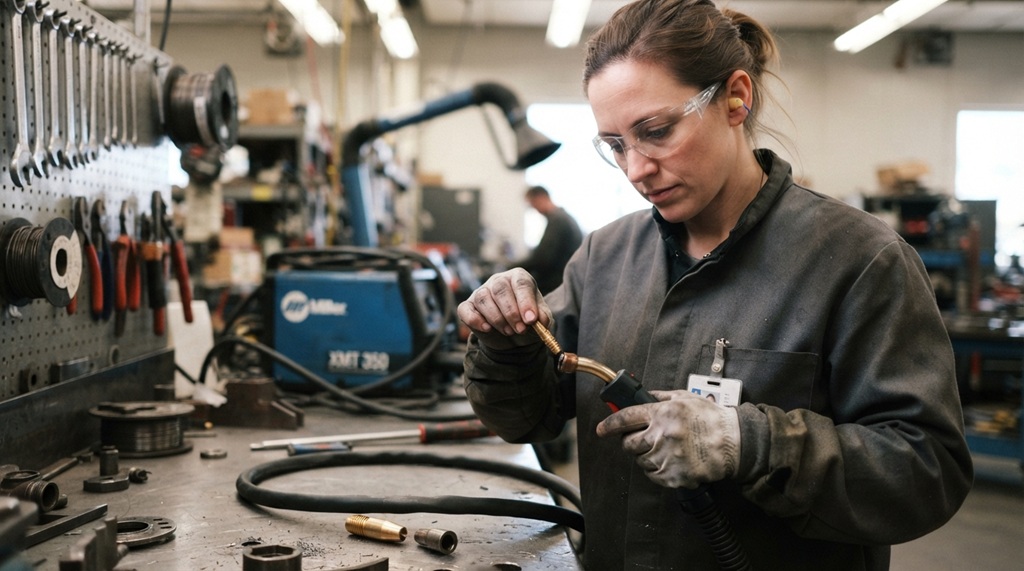
Every torch tip has a maximum amperage rating, and running past it accelerates wear and burnback risk. Check the rating stamped on the tip or listed in the manufacturer’s spec sheet before installing it.
Running a tip below its rated amperage is safe and even extends its life. Running it above the rating causes the bore to heat up faster and expand out of tolerance. Once the bore is too large, the wire won’t stay centered anymore, and burnback becomes far more likely.
A simple habit fixes this: check your amperage setting against the tip’s rating every time you switch jobs or materials. It takes ten seconds and prevents a problem that would otherwise take ten minutes to diagnose.
Recognizing Worn Tips Before They Cause Burnback
A worn tip often shows visible spatter buildup, a discolored or enlarged bore, or an oval-shaped opening instead of a round one. Any of these signs means it’s time to replace the tip, not clean it and reuse it.
Here’s a quick way to check:
- Look at the bore shape. Hold the tip up to light. If the opening looks oval or ragged instead of perfectly round, it’s worn.
- Check for spatter buildup. Spatter stuck around the tip opening restricts gas flow and traps heat.
- Feel for looseness. A tip that wobbles in the diffuser isn’t seated properly and needs attention.
- Watch your arc. A wandering or unstable arc, even with good technique, often means the tip has worn out of spec.
Most welders replace tips too infrequently, not too often. A new tip costs a few dollars. A burnback repair costs downtime, and sometimes a damaged neck or diffuser too.
Setup and Technique Tips That Reduce Burnback Risk
Even the right tip can burn back if your setup and technique work against it. A few habits make a real difference here, and they cost nothing to implement.
Keep Stickout Consistent
Stickout the distance the wire extends past the tip should stay consistent and match your wire feed speed and amperage. Excess stickout raises resistance, which raises heat, which raises burnback risk. Most MIG welding calls for roughly 3/8 to 1/2 inch of stickout, though this varies by process and material thickness.
Maintain a Steady Torch Angle
A steady, moderate torch angle keeps the arc predictable and the wire feeding evenly into the puddle. Sudden angle changes or excessive dragging can disrupt how the wire exits the tip.
Preventing Feed Friction with Proper Liner Maintenance
A damaged, dirty, or worn torch liner restricts wire movement long before it reaches the contact tip, causing an erratic, stop-start feed that dramatically increases heat buildup and burnback frequency. Regularly inspecting, blowing out, and replacing your liner ensures a smooth, uninterrupted wire delivery that protects your tip from premature failure. If you are switching welding processes or fine-tuning your shop setup, mastering torch dynamics and shielding stability is equally essential explore our comprehensive guide on set up a TIG welding machine for flawless results to achieve consistent arc control and flawless bead profile across all your equipment.
One Insight Most Guides Skip: Match Tip Recess to Your Gas Nozzle
Many welders focus only on bore size and forget that tip recess how far the tip sits inside the nozzle also affects burnback. A tip set too far forward exposes it to more spatter and heat, accelerating wear. A tip set too far back can disrupt shielding gas coverage, which affects arc stability. Check your torch manufacturer’s recommended recess setting, not just the generic default, since this varies more between torch brands than most people realize.
Frequently Asked Questions
What’s the most common cause of burnback in MIG welding?
A mismatched or worn contact tip is the most common cause. When the bore no longer matches the wire diameter precisely, the arc can travel back into the tip and fuse to it.
How often should I replace my welding torch tip?
Replacement frequency depends on amperage and duty cycle, but many welders change tips every few hours of continuous arc time or at the first sign of an oval bore or spatter buildup. Waiting until the tip visibly fails usually means you’ve already had feed problems for a while.
Can the wrong gas flow cause burnback?
Gas flow itself doesn’t directly cause burnback, but poor shielding can destabilize the arc, which indirectly increases the risk. Focus first on tip fit and wire feed, then check gas flow if problems continue.
Does tip material really make a difference for burnback prevention?
Yes. Chrome zirconium copper tips resist heat and wear better than standard copper, so they hold their bore size longer under high amperage. This keeps the wire centered and reduces the chance of the arc reaching back into the tip.
Is burnback more common with certain wire types?
Thinner wires like 0.023–0.030 inch are more prone to burnback because they have less mass to resist heat buildup and are more sensitive to feed inconsistencies. Using the correctly sized tip matters even more with these smaller wire diameters.
Conclusion
Preventing burnback comes down to a few consistent habits: match your tip size to your wire, choose a tip material suited to your amperage and duty cycle, and replace worn tips before they fail. Pair that with steady stickout, a consistent torch angle, and proper liner maintenance, and burnback becomes a rare problem instead of a recurring one.
Check your current tip against these guidelines before your next weld. A five-minute check now saves you a frustrating mid-job repair later.