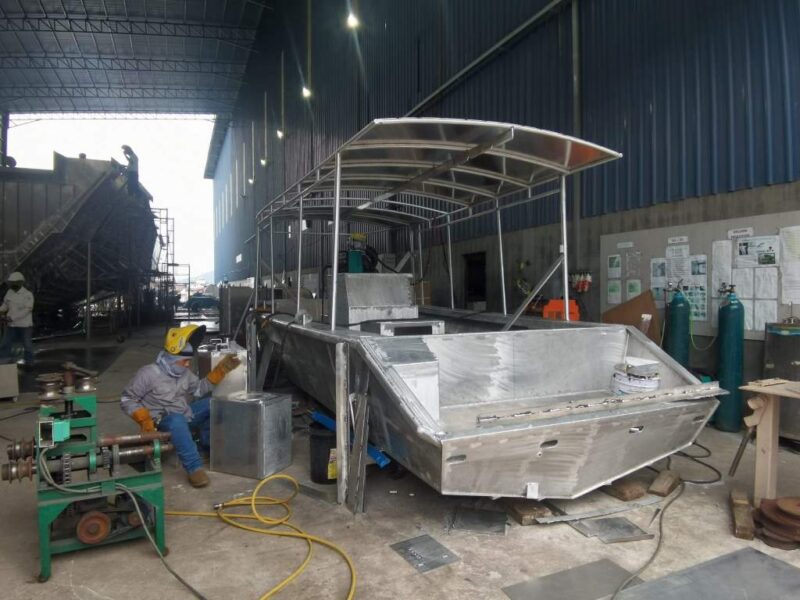

Maine lobster boats are built to survive harsh saltwater, heavy loads, and long working hours. That is why fabricators rely on aluminum and advanced welding methods to ensure strength and durability. High frequency aluminum TIG setups play a key role in this process because they deliver clean, precise welds that resist corrosion. According to the National Marine Manufacturers Association, aluminum boats account for over 40 percent of new commercial vessel builds in the United States. In addition, research from the American Welding Society shows that TIG welding offers superior control for thin marine grade aluminum. This article explains how to set up and optimize high frequency TIG systems for lobster boat fabrication in Maine.
Why Aluminum Dominates Lobster Boat Fabrication
Aluminum has become the preferred material for modern lobster boats. Builders choose it because it balances strength, weight, and corrosion resistance.
Key advantages of aluminum in marine builds
- It resists saltwater corrosion better than steel
- It reduces vessel weight which improves fuel efficiency
- It allows easier repair and modification
- It provides long service life with minimal maintenance
Additionally, aluminum responds well to TIG welding. This means fabricators can achieve cleaner joints compared to other welding processes. As a result, lobster boats maintain structural integrity even under constant stress.
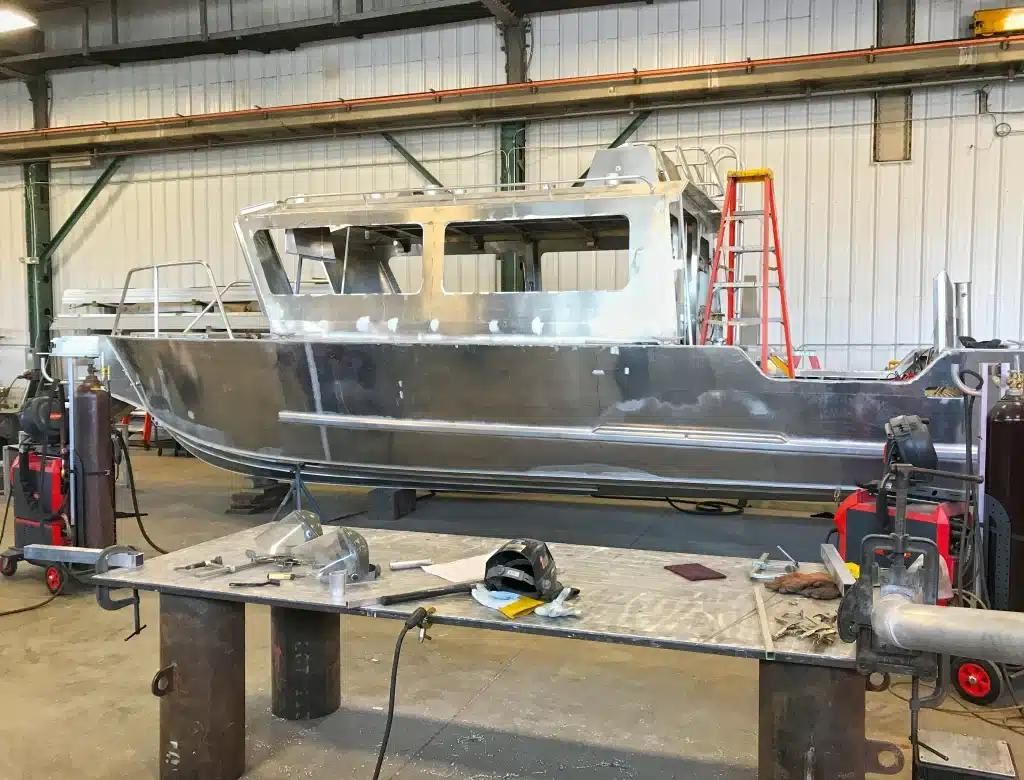
Why Maine builders prefer TIG welding
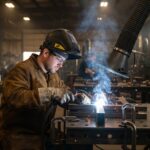
Maine shipyards often work with complex hull shapes and tight tolerances. TIG welding offers precise arc control, which helps avoid distortion. It also produces minimal spatter, which reduces cleanup time. Therefore, it fits perfectly with high quality boatbuilding standards in the region.
Understanding High Frequency TIG Welding
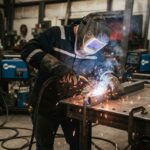
High frequency TIG welding uses a non contact arc starting method. It creates an electrical spark that initiates the arc without touching the workpiece.
How high frequency works
The system generates a high voltage pulse. This pulse ionizes the air gap between the tungsten electrode and aluminum surface. As a result, the arc starts smoothly without contamination.
Benefits for aluminum welding
- Cleaner arc starts reduce tungsten contamination
- Stable arc improves weld consistency
- Better control over thin aluminum sheets
- Reduced risk of defects such as porosity
Because aluminum forms an oxide layer, consistent arc stability becomes critical. High frequency systems help break through that oxide layer effectively.
Essential Equipment for High Frequency Aluminum TIG Setups
To achieve reliable results, fabricators must choose the right equipment. Each component plays a role in weld quality.
TIG welding machine
A modern AC TIG welder with high frequency capability is essential. It should offer adjustable balance control and frequency settings. These features allow welders to fine tune penetration and cleaning action.
Tungsten electrodes
For aluminum, welders typically use:
- Pure tungsten
- Zirconiated tungsten
- Lanthanated tungsten
Each type provides different arc characteristics. However, lanthanated tungsten often delivers stable performance with modern machines.
Shielding gas
Argon remains the standard shielding gas for aluminum TIG welding. It protects the weld pool from contamination. In some cases, welders mix helium for deeper penetration.
Filler material
Marine grade aluminum alloys require compatible filler rods. Common choices include 4043 and 5356 alloys. The correct selection depends on strength and corrosion resistance requirements.
Setting Up High Frequency TIG for Lobster Boats
Proper setup determines weld quality. Even small adjustments can impact performance.
Step by step setup process
- Clean the aluminum surface thoroughly to remove oxide and contaminants
- Set the machine to AC mode for aluminum welding
- Adjust high frequency start to ensure smooth arc ignition
- Fine tune balance control for cleaning versus penetration
- Select appropriate amperage based on material thickness
Each step ensures consistent weld quality across large boat structures.
Optimizing AC balance and frequency
AC balance controls how much time the arc spends cleaning versus penetrating. More cleaning helps remove oxide layers. More penetration strengthens the weld.
AC frequency controls arc tightness. Higher frequency creates a narrower arc. This improves precision, especially for thin panels used in lobster boats.
Common Challenges in Aluminum TIG Welding
Even experienced welders face challenges when working with aluminum.
Oxide layer issues
Aluminum forms an oxide layer that melts at a higher temperature than the base metal. This can cause inconsistent welds if not managed properly.
Heat distortion
Aluminum conducts heat quickly. This leads to distortion in large panels. Welders must control heat input carefully.
Porosity
Contamination or poor shielding gas coverage can trap gases in the weld. This results in weak spots.
Practical Solutions for Maine Fabricators
To overcome these challenges, professionals use proven techniques.
Best practices for clean welds
- Always clean surfaces with a stainless steel brush
- Use proper gas flow rates to protect the weld pool
- Maintain correct torch angle and travel speed
- Keep tungsten sharp and contamination free
Heat control techniques
- Use pulse settings to manage heat input
- Weld in short sections to reduce distortion
- Allow cooling time between passes
These strategies help maintain structural integrity in lobster boats.
Safety Considerations in TIG Welding
Safety is critical in any fabrication environment. TIG welding involves high temperatures and electrical hazards.
Key safety measures
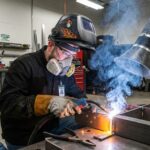
- Wear proper protective gear including gloves and helmet
- Ensure proper ventilation to avoid gas exposure
- Inspect equipment regularly for faults
- Follow electrical safety guidelines
By maintaining safe practices, fabricators protect both workers and equipment.
Real World Example from a Maine Shipyard
A mid sized shipyard in Maine upgraded its TIG welding systems with advanced high frequency machines. After the upgrade, the team reported:
- Improved weld consistency across hull sections
- Reduced rework due to fewer defects
- Faster production times with stable arc starts
This example shows how proper setup directly impacts productivity and quality.
Future Trends in Aluminum TIG Welding
Technology continues to improve welding processes.
Emerging innovations
- Digital control systems for precise adjustments
- Automated TIG welding for repetitive tasks
- Advanced shielding gas mixtures for better performance
These trends will further enhance lobster boat fabrication in Maine.
Conclusion
High frequency aluminum TIG setups are essential for building strong and reliable Maine lobster boats. They provide clean arc starts, stable performance, and precise control. By selecting the right equipment and optimizing settings, fabricators can overcome common challenges and produce high quality welds. If you want to improve your marine fabrication results, review your TIG setup today and apply these proven techniques.
FAQs
What is high frequency TIG welding used for in boat building?
High frequency TIG welding is used to create clean and precise welds on aluminum boat structures. It ensures strong joints and reduces contamination.
Why is aluminum preferred for lobster boats?
Aluminum offers corrosion resistance, lighter weight, and long service life. These qualities make it ideal for harsh marine environments.
How do you prevent porosity in aluminum TIG welding?
You can prevent porosity by cleaning the material properly, using correct shielding gas flow, and maintaining stable arc conditions.
What tungsten is best for aluminum TIG welding?
Lanthanated tungsten is widely used because it provides stable arc performance and works well with modern welding machines.
How does AC frequency affect TIG welding?
AC frequency controls arc width. Higher frequency produces a tighter arc, which improves precision on thin aluminum materials.