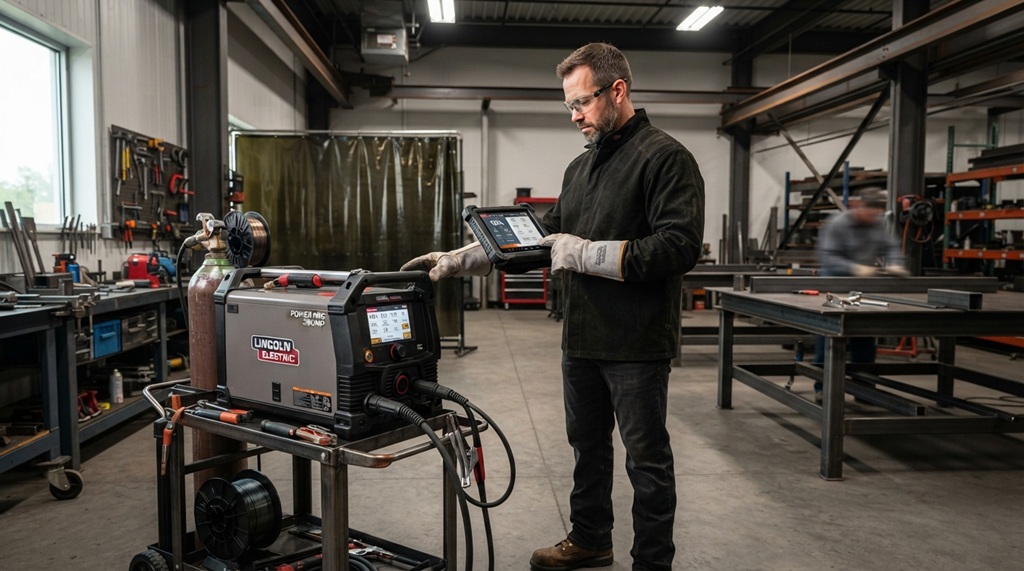

A welding machine’s price tag tells you almost nothing about what it’s actually worth. Two machines can cost the same amount and have wildly different real-world value, depending on duty cycle, build quality, output stability, and what’s included in the box. The way to evaluate welding machine value is to compare cost against capability, not against the sticker price of the machine sitting next to it on the shelf.
Most buyers overpay in one of two ways: they get talked into features they’ll never use, or they buy the “cheap” option and end up replacing it within a year because it can’t handle real work. Both mistakes come from the same root problem: judging a welder by price instead of by what it can actually do for the money.
This guide breaks down the exact factors that determine whether a welding machine is a fair deal, a rip-off, or a genuine bargain, so you can walk into any purchase,e new, used, or refurbished, ed with a clear head.
Understand What “Value” Actually Means for a Welding Machine
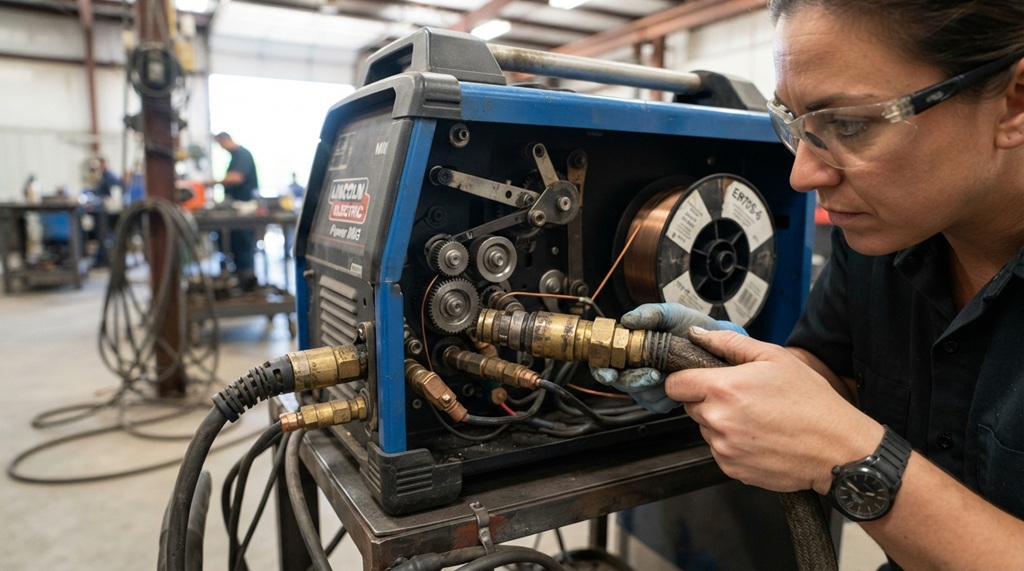
Value is the ratio between what a machine can reliably do and what you pay for it, not the lowest price you can find. A $400 machine that quits after 200 hours of use has worse value than a $700 machine that runs reliably for a decade, even though it cost less upfront.
To judge value properly, weigh these four things together instead of looking at any one in isolation:
- Duty cycle – how long the machine can run before it needs to cool down
- Output quality – how stable and clean the arc is at your typical amperage
- Build materials – transformer-based vs. inverter-based internals, and the quality of internal components
- Support and parts availability – whether you can get consumables, repairs, or warranty service when something goes wrong
A machine that scores well across all four is worth paying more for. A machine that’s cheap because it cuts corners on one or more of these will usually cost you more in the long run through downtime, poor welds, or early replacement.
Evaluating Amperage and Duty Cycle for True Machine Value
Duty cycle and amperage ratings directly dictate a machine’s operational threshold, making them the primary metrics to analyze before evaluating price tags. Operating a welder with an insufficient duty cycle at your required output forces frequent cool-down delays—a hidden inefficiency that rapidly erodes profit margins and inflates project timelines despite any upfront savings. Prioritizing these performance benchmarks ensures you invest in real productivity rather than paying for unnecessary downtime; equally, when expanding your shop’s capabilities, balancing raw power against precision cut quality is essential, picking the best plasma cutter for clean metal cuts to apply these same rigorous evaluation standards across your entire cutting and welding setup.
Why Duty Cycle Gets Overlooked
Manufacturers often advertise duty cycle at a lower amperage than most buyers will actually use, which makes the number look better than it performs in real conditions. For example, a machine rated “60% duty cycle at 130A” might only manage a 20% duty cycle at 200A a detail that’s easy to miss if you’re just skimming the spec sheet.
What to Actually Compare
Look at the duty cycle rating specifically at the amperage you’ll be welding at most often, not the headline number on the box. If you’re doing production work, structural fabrication, or anything with long weld beads, prioritize a machine with a higher duty cycle even if it costs more; the downtime from an underpowered unit adds up fast and erodes any savings from the lower price.
Check the Internal Build: Transformer vs. Inverter Technology
Inverter-based welders are generally lighter, more energy-efficient, and offer smoother arc control than older transformer-based machines, but that doesn’t automatically make them the better value for every buyer. Transformer machines tend to be heavier and less efficient, but they’re also simpler, often cheaper to repair, and can be more tolerant of rough job-site conditions and power fluctuations.
When Inverter Technology Is Worth the Premium
If you need portability, precision (especially for TIG or thin-gauge work), or multi-process flexibility, an inverter machine’s higher price is usually justified. The improved arc stability alone can reduce rework and wasted consumables enough to offset the cost difference over time.
When a Transformer Machine Is the Smarter Buy
For basic stick or MIG work in a fixed shop location where portability doesn’t matter, a well-built transformer machine can outperform a cheap inverter unit in durability and repairability. Don’t assume “newer technology” automatically equals “better value;” match the technology to how and where you’ll actually use the machine.
Factor In Brand Reputation and Parts Availability
A welding machine is only as valuable as your ability to keep it running, so brand reputation and parts availability deserve as much weight as the spec sheet. A no-name brand offering more features for less money can look like a bargain until you need a replacement torch, control board, or warranty repair and discover the manufacturer has no local support or has stopped making parts for that model.
Before buying, check for three things:
- Parts availability – search for consumables and replacement parts for the exact model, not just the brand, since discontinued models can be a dead end even from reputable manufacturers
- Warranty terms – a longer warranty on the power source usually signals the manufacturer trusts its own build quality
- Service network – for shops and contractors, a brand with local authorized repair centers is worth more than a slightly cheaper machine with no service options nearby
This is one factor a lot of buying guides skip entirely: the value of a welding machine isn’t fixed at the moment of purchase;se it changes over the life of the machine based on how easy it is to keep operational. A mid-tier machine backed by strong parts support is frequently a better long-term value than a top-spec machine from a brand that’s hard to get service for.
Evaluate the Total Cost of Ownership, Not Just the Purchase Price
The purchase price is only the starting point; int the real cost of a welding machine includes consumables, electricity draw, maintenance, and how often it needs repair over its working life. Two machines priced identically at checkout can end up hundreds of dollars apart in total cost within just a year or two.
Consumables and Running Costs
Check what type of tips, nozzles, liners, or electrodes the machine uses, and whether those are widely available at competitive prices, since some machines lock you into proprietary or hard-to-find consumables that inflate ongoing costs. Also consider amperage draw relative to your electrical setup; a machine that trips breakers or requires an electrical upgrade adds hidden cost that never shows up on the price tag.
Maintenance and Downtime
A cheaper machine with a track record of frequent fan failures, loose connections, or control board issues will cost you in downtime even if repairs themselves are inexpensive. When comparing two options, weigh reported reliability from actual users and reviews as heavily as you weigh the spec sheet. A slightly more expensive machine with a strong reliability reputation is often the better financial decision once you account for lost work time.
Know How to Judge Used or Refurbished Welding Machines
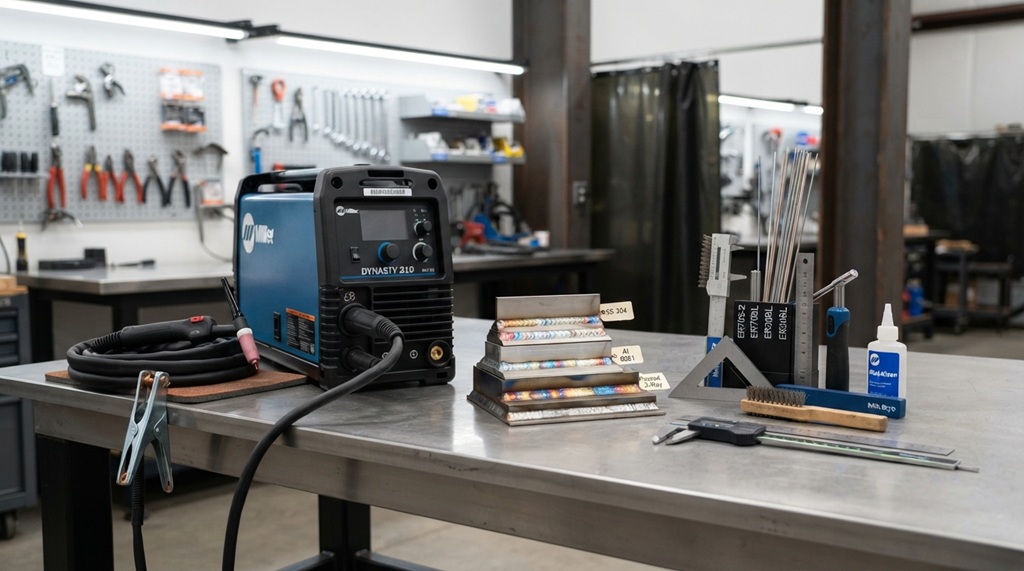
Used and refurbished welders can offer excellent value, but only if you inspect them properly instead of trusting the listing description alone. A used machine at 40-50% off retail is only a good deal if the internals, cables, and control components are in working condition; otherwise,se you’re paying for a repair project, not a welder.
What to Physically Check
- Cables and connectors – look for cracked insulation, corrosion, or signs of overheating at the connections.
- Fan and vents – dust buildup is normal, but check that the fan spins freely and vents aren’t blocked or damaged
- Control panel and switches – test every dial, switch, and digital display for responsiveness
- Run test – ask to see (or perform) an actual test weld before buying, not just a power-on check.k
Questions to Ask the Seller
Ask directly about the machine’s age, typical use (hobby vs. production), any past repairs, and why it’s being sold. A seller who can answer these clearly and consistently is generally more trustworthy than one who’s vague about the machine’s history;ry vagueness is often a sign the machine was pushed hard or poorly maintained.
Match the Machine to Your Actual Skill Level and Use Case
The best-value welding machine for a professional fabricator is often the worst-value machine for a hobbyist, and vice versa; value is always relative to what you actually need it to do. Overpaying isn’t just about price; it also happens when you buy far more machine than your projects require, because you end up paying for capabilities that sit unused.
Beginners and hobbyists usually get better value from a simpler, single-process machine with solid basic performance rather than a feature-loaded multi-process unit they won’t fully use for years, if ever. Professionals and heavy users, on the other hand, get poor value from underpowered budget machines that can’t sustain the duty cycle or amperage their work demands, even if the upfront price looks attractive.
Before comparing machines, be honest about your actual project scope, material thickness, expected weekly usage, and whether you need portability,y and use that as the filter for which specs actually matter to you.
Frequently Asked Questions
Is a more expensive welding machine always better value?
No. A higher price only reflects better value if it comes with a duty cycle, build quality, or feature set that actually matches your work. Paying more for capabilities you’ll never use is still overpaying, regardless of the machine’s overall quality.
What’s the single most important spec to check when comparing welding machines?
Duty cycle at your typical working amperage is usually the most overlooked and most important factor, since it directly determines how much real work the machine can do before it needs to cool down. Amperage range matters too, but only in combination with duty cycle at that range.
Are off-brand or budget welding machines ever a good value?
They can be, especially for occasional hobby use, as long as parts and support are available and reviews confirm reasonable reliability. The risk increases for production or professional use, where downtime and part shortages have a real cost.
How much should I expect to pay for a reliable entry-level welder?
Prices vary significantly by process (stick, MIG, TIG) and region, so it’s best to compare current listings from a few reputable retailers rather than rely on a fixed number. Focus less on hitting a specific price point and more on getting solid duty cycle and build quality within your budget range.
Is it worth buying a used welding machine to save money?
Yes, if you inspect it thoroughly or have it tested before buying, since a well-maintained used machine can offer excellent value at a lower price. It’s not worth it if you can’t verify its condition, since hidden internal damage can turn a “deal” into an expensive repair.
Final Thoughts
Evaluating welding machine value comes down to looking past the price tag and weighing duty cycle, build quality, ongoing costs, and support against what you’ll actually use the machine for. A fair price is one where the machine’s real capabilities match why you paid for it; it’s not the lowest number on the shelf, and not the one with the longest feature list.
Take the time to compare duty cycle at your actual working amperage, check parts and service availability, and be realistic about your skill level and project needs before you buy. Do that, and you’ll consistently walk away with a machine that’s worth what you paid for it, whether that’s your first hobby welder or a production machine for the shop floor.