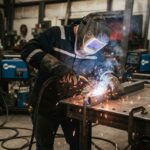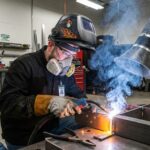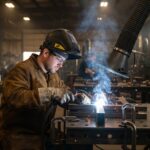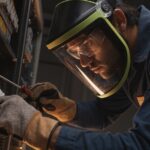
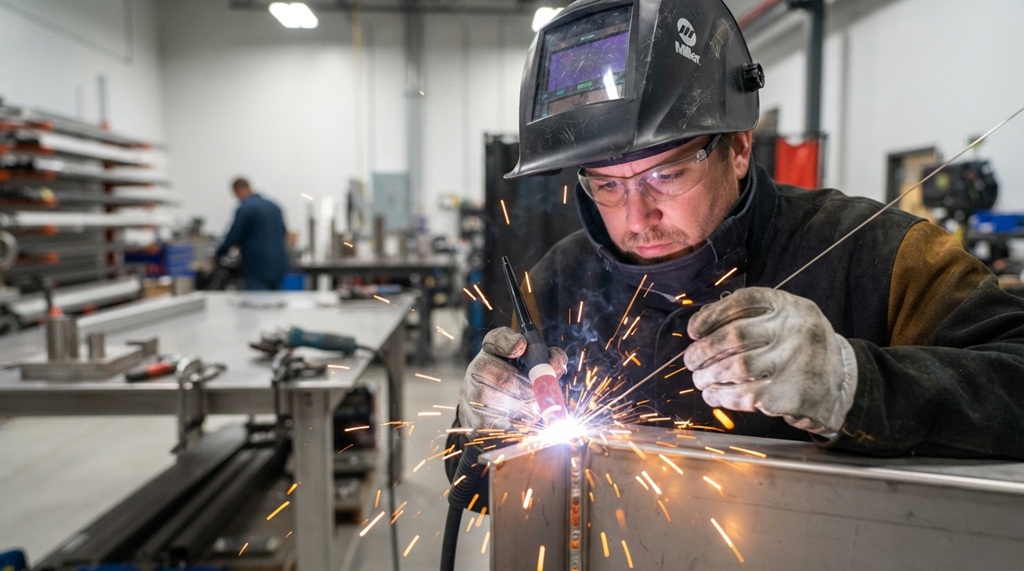

The best welding helmet for ultimate protection combines a fast auto-darkening filter (under 1/25,000 second), a shade range matching your welding process, true ANSI Z87.1 certification, and a comfortable headgear fit that won’t slip mid-weld. Beyond those basics, the right helmet depends on the type of welding you do most, how many hours you spend behind the hood, and where you’re working.
Choosing a welding helmet isn’t just about grabbing whatever’s on sale at the hardware store. A poor-quality lens or slow reaction time can expose your eyes to arc flash, a painful and sometimes permanent injury welders call “arc eye.” On the flip side, spending money on features you’ll never use is just as wasteful.
This guide breaks down exactly what to look for, what’s marketing fluff, and how to match a helmet to your specific welding work whether that’s occasional garage projects or eight-hour shifts on a job site.
Why Welding Helmet Protection Matters More Than You Think
Welding arcs produce intense visible light, ultraviolet (UV), and infrared (IR) radiation, all of which can damage your eyes and skin with repeated or prolonged exposure. A helmet isn’t just blocking brightness it’s filtering radiation your eyes can’t even perceive is hurting them until hours later.
According to industry experts, arc eye (also called flash burn or photokeratitis) often doesn’t show symptoms until several hours after exposure, which means welders can get injured without realizing it in the moment. This delayed reaction is exactly why cutting corners on helmet quality is risky you won’t get instant feedback that something’s wrong.
Long-term UV exposure has also been linked to cataracts and other eye damage over a career of welding. A properly rated helmet protects against both the immediate flash and the cumulative damage that builds up over years of work.
Understanding Auto-Darkening Filters (ADF) vs Passive Lenses
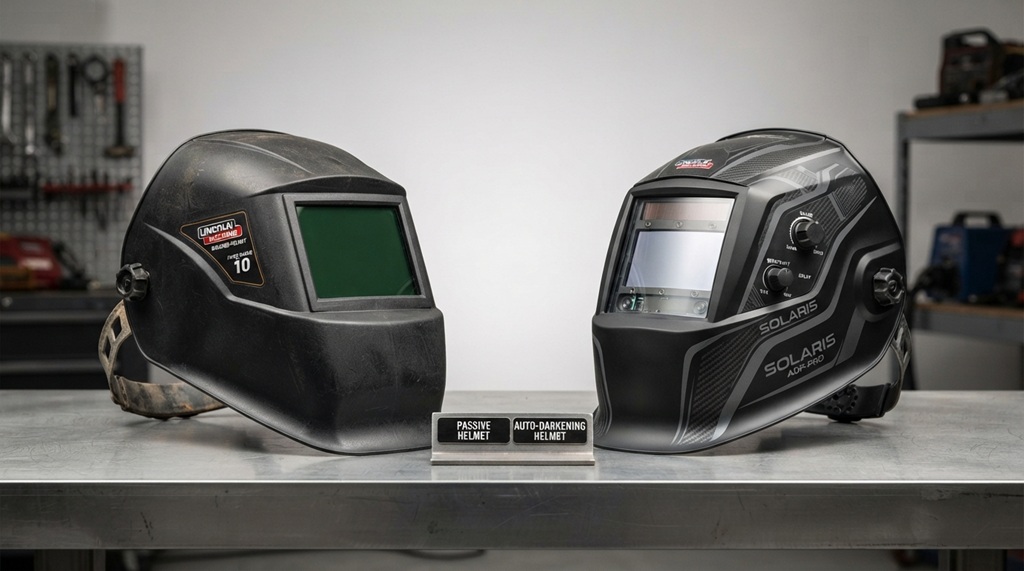
Auto-darkening filters automatically switch from a light to dark shade the instant an arc is struck, while passive lenses stay a fixed dark shade at all times. Most professional welders today use ADF helmets because they allow clear visibility before striking an arc, which improves accuracy and reduces neck strain from constantly flipping the helmet up and down.
How Auto-Darkening Filters Work
ADF lenses use sensors that detect the arc’s light and trigger liquid crystal layers to darken almost instantly. The key spec to check is switching speed top-tier helmets switch in 1/20,000 to 1/25,000 of a second, while budget models may lag closer to 1/3,600 second. That gap matters because a slower filter lets more raw arc flash reach your eyes before it darkens.
When Passive Lenses Still Make Sense
Passive lenses are simpler, cheaper, and have no batteries or sensors to fail, which makes them reliable for occasional or hobbyist use. They’re less practical for production welding or tight, detailed work where you need to see your torch position before striking the arc.
Choosing the Right Shade Range for Your Welding Process
The shade range you need depends on the amperage and welding process you use most, not just personal preference. Most auto-darkening helmets offer adjustable shades roughly between 9 and 13, which covers the majority of MIG, TIG, and stick welding applications.
- Stick welding (SMAW): Typically shade 10-13, depending on amperage
- MIG welding (GMAW): Usually shade 10-12
- TIG welding (GTAW): Often needs a lower shade range (8-10) for low-amperage precision work
- Plasma cutting: Generally shade 9-11
If you switch between processes regularly, look for a helmet with a wide adjustable shade range rather than a fixed-shade model. Fixed-shade helmets are cheaper but limit you to one type of work.
ANSI, CSA, and Safety Certifications You Should Never Skip
A legitimate welding helmet sold in the U.S. should meet ANSI Z87.1 standards, and helmets sold in Canada should meet CSA Z94.3. These certifications confirm the lens and shell have been tested for impact resistance and optical clarity, not just marketed as “professional grade.”
Unfortunately, the welding market has seen counterfeit or falsely labeled helmets, especially through third-party online marketplaces. Always check for the certification stamp directly on the lens or helmet shell not just in the product description and buy from established brands or authorized retailers when possible.
If a helmet is significantly cheaper than comparable models with no clear certification listed, treat that as a red flag rather than a bargain.
Fit, Weight, and Comfort for All-Day Wear
A helmet that doesn’t fit properly will distract you and can even compromise protection if it shifts during work. Comfort isn’t a luxury feature it directly affects how consistently you keep the helmet properly positioned throughout a shift.
Weight and Balance
Helmets in the 1-1.5 lb range are generally easier on the neck during long sessions compared to bulkier 2+ lb models. Look for helmets with adjustable headgear that distributes weight across the forehead and back of the head rather than resting weight entirely on top.
Adjustability
A quality headgear system lets you adjust circumference, tilt angle, and distance from your face independently. This matters especially if you wear prescription glasses or a respirator underneath, since a helmet that’s too shallow can press uncomfortably against other gear.
Special Features Worth Considering (And Ones You Can Skip)
Not every feature marketed on welding helmets adds real protective value; some are genuinely useful, others are just upsells. Knowing the difference can save you money without sacrificing safety.
Worth considering:
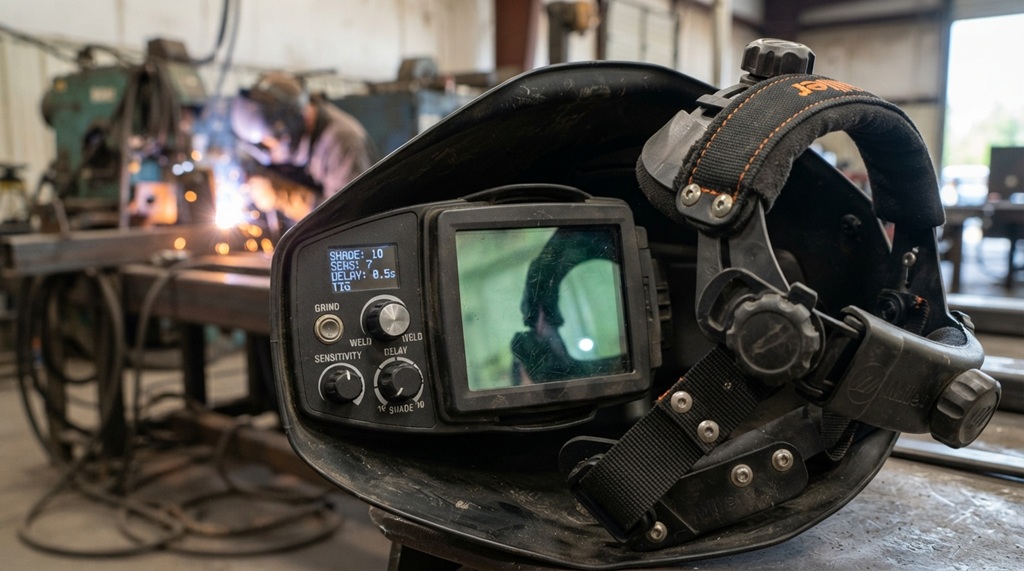
- Grinding mode: Lets you flip the lens to a lighter, fixed shade for grinding without removing the helmet entirely
- Multiple sensors (3-4): Improves detection reliability, especially for out-of-position welding like overhead work
- Solar-assisted battery with replaceable backup: Reduces the risk of the helmet dying mid-shift
Often unnecessary for most users:
- Bluetooth-connected helmets or built-in communication systems, which add cost and complexity most welders don’t need
- Extremely wide viewing areas if you primarily do small, detailed work rather than wide fabrication
One angle that often gets overlooked: sensor placement blind spots. Helmets with only 2 sensors can fail to trigger properly during tight, angled welds where your torch or body blocks the sensor’s view of the arc. If you frequently weld in cramped positions pipe welding, for instance a 4-sensor helmet is a genuinely practical upgrade, not just a marketing bullet point.
Matching Helmet Optics to Your Fabrication Environment
Choosing the ideal helmet comes down to the specific demands of your everyday trade rather than a one-size-fits-all specification. While a certified pipeline welder tackling full-shift outdoor projects requires a high-performance, multi-shade auto-darkening shield to handle extreme amperage and intense arc glare, hobbyists performing occasional garage repairs can focus on lightweight comfort and basic optical clarity. Tailoring your protective gear to your primary workpiece materials ensures both optimal safety and efficiency; for instance, while structural steel and heavy alloy fabrication rely on high-amp arc protection, working with synthetic components demands entirely different temperature controls and techniques—making specialized tools like those evaluated in our ATOLS upgraded plastic welder review essential for managing delicate thermoplastic repairs alongside traditional metalwork.
- Hobbyist/DIY: A mid-range ADF helmet with adjustable shade 9-13 and basic ANSI certification is usually sufficient
- Professional shop welder: Prioritize fast switching speed, 4-sensor detection, and a lightweight design for all-day comfort
- Outdoor/structural welding: Look for helmets rated for wider temperature ranges and stronger impact resistance, since conditions are less controlled
- Pipe welding or tight spaces: Multiple sensors and a helmet with a slightly larger viewing lens help reduce blind spots in awkward positions
Buying based on your actual working conditions rather than the most expensive model available usually leads to better long-term satisfaction and fewer needless upgrades.
Frequently Asked Questions
How often should I replace my welding helmet lens?
Replace the lens if you notice scratches, discoloration, or inconsistent darkening, since these reduce optical clarity and protection. Most welders check their lens every few months and replace it annually with regular use, though heavy daily use may require more frequent checks.
Can I use a cheaper helmet for occasional home projects?
Yes, as long as it carries proper ANSI Z87.1 or CSA Z94.3 certification, a budget helmet can be safe for occasional use. The main tradeoffs are usually slower switching speed and less durable materials, not necessarily reduced protection if certified correctly.
Do auto-darkening helmets ever fail to switch shades?
It’s rare with quality helmets, but battery failure, sensor blockage, or extreme cold can cause a delayed reaction. This is why solar-assisted models with replaceable batteries and multi-sensor designs are generally more reliable, especially in variable conditions.
Is a bigger viewing lens always better?
Not necessarily a bigger lens helps with wide fabrication work but isn’t essential for detailed or small-scale welding. Choose lens size based on your typical project type rather than assuming bigger automatically means better protection.
What’s the difference between true color and standard ADF lenses?
True color lenses are designed to reduce the greenish tint of standard lenses, making it easier to distinguish weld pool colors and surrounding materials. This can improve accuracy for detailed work, though it doesn’t add extra protective value beyond a standard certified lens.
Conclusion
The best welding helmet isn’t the most expensive one it’s the one that matches your welding process, work environment, and the number of hours you spend behind the lens. Prioritize a fast auto-darkening switching speed, proper ANSI or CSA certification, and a shade range suited to your typical amperage before considering extra features. Get the fundamentals right, and the helmet will protect you reliably for years, whether you’re welding occasionally in a garage or working full shifts on a job site.