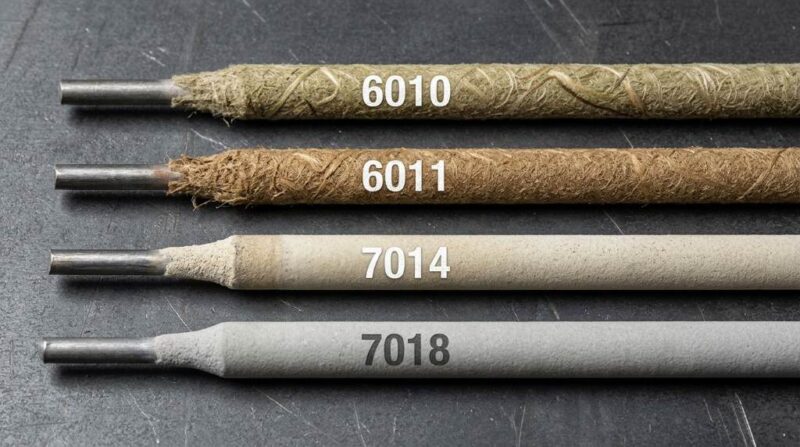

Choosing the right welding rod can make or break your project. Over 60 percent of welding defects come from using the wrong electrode. This makes it key to know the differences between 6010, 6011, 7014, and 7018 rods. Each type serves a unique purpose and works best in specific conditions.
Understanding Welding Rod Basics
Welding rods are coated metal wires used in stick welding. They melt to form a bond between metals. The coating protects the weld from oxygen and adds alloying elements. This improves the strength and quality of the weld.
The numbers on welding rods have specific meanings. The first two digits show the tensile strength in thousands of psi. The third digit indicates the welding position. The last digit reveals the coating type and current compatibility.
For example, the 6010 rod has a tensile strength of 60,000 psi. It works in all positions and uses a high cellulose sodium coating. This makes it ideal for deep penetration and vertical welding.
Deep Dive into 6010 Welding Rods
Key Features
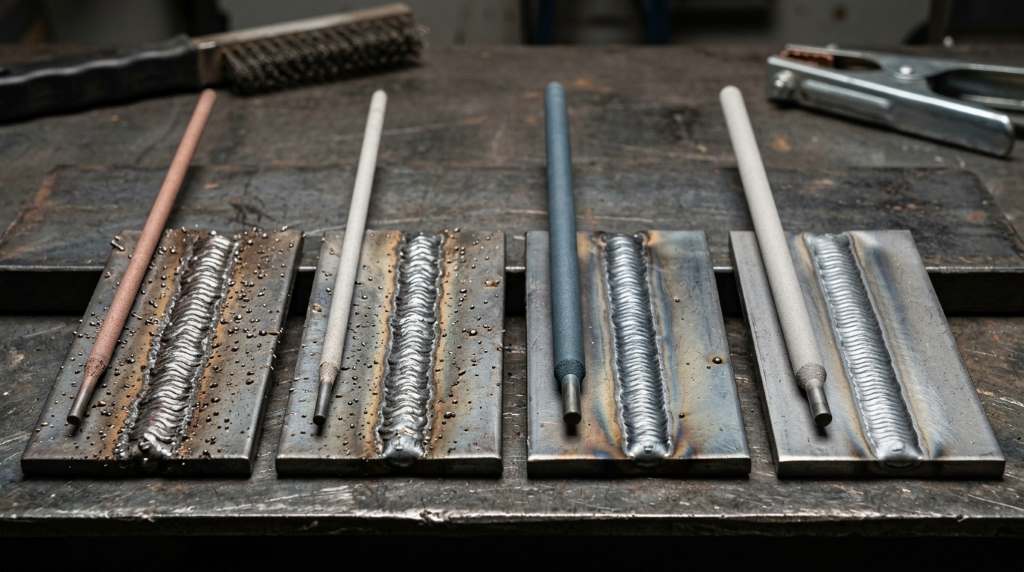
The 6010 rod is known for its deep penetration capabilities. It uses a cellulose sodium coating that produces a forceful arc. This arc cuts through rust, paint, and dirt on the metal surface. It is perfect for root passes in pipe welding.
This rod works well with DC reverse polarity. It creates a stable arc and minimal slag. Welders love it for its ability to handle dirty or oily metals. It is also great for outdoor use due to its strong arc force.
Best Uses
Use 6010 rods for structural steel and pipe welding. They excel in vertical and overhead positions. Their deep penetration makes them ideal for thick materials. They are also useful for repair work on old or rusty metals.
However, 6010 rods produce more spatter than other types. They also require a steady hand due to their aggressive arc. Beginners may find them harder to control compared to other rods.
Pros and Cons
Pros include deep penetration and the ability to weld through contaminants. Cons include high spatter and a steeper learning curve. They are not the best choice for thin metals or clean, precise welds.
Exploring 6011 Welding Rods
Key Features
The 6011 rod is similar to the 6010 but works with AC and DC currents. It also has a cellulose potassium coating. This makes it versatile for various welding machines. It offers deep penetration and a strong arc force.
This rod is great for general-purpose welding. It handles dirty, rusty, or painted metals well. It is also suitable for outdoor welding due to its stable arc. Many farmers and DIY welders prefer it for its flexibility.
Best Uses
Use 6011 rods for repair work, construction, and farm equipment. They work well on mild steel and galvanized metals. They are also good for vertical and overhead welding. Their versatility makes them a popular choice for many projects.
Like the 6010, 6011 rods produce more spatter. They also have a rougher arc compared to other rods. This can make them less ideal for thin metals or precision work.
Pros and Cons
Pros include versatility and the ability to weld on dirty metals. Cons include high spatter and a less smooth arc. They are not the best for thin materials or clean, aesthetic welds.
Understanding 7014 Welding Rods
Key Features
The 7014 rod uses an iron powder coating with a high deposit rate. It is known for its smooth and stable arc. This rod works well with AC and DC currents. It is easy to use and produces minimal spatter.
This rod is great for flat and horizontal welding positions. It is also suitable for thin metals due to its gentle arc. Many beginners prefer it for its ease of use and clean welds.
Best Uses
Use 7014 rods for sheet metal, light structural steel, and general fabrication. They are ideal for projects requiring a smooth finish. They also work well for welding over old welds or repairs.
Cleaning the clean weld joint before starting ensures better results. This rod is less effective for deep penetration or vertical welding. It is also not the best for dirty or rusty metals.
Pros and Cons
Pros include a smooth arc, minimal spatter, and ease of use. Cons include limited penetration and suitability for dirty metals. They are best for clean, thin materials and flat positions.
Exploring 7018 Welding Rods
Key Features
The 7018 rod is a low-hydrogen electrode with an iron powder coating. It produces strong, ductile welds with minimal spatter. It works well with AC and DC currents. This rod is known for its smooth and stable arc.
It is designed for high-strength welding applications. It is also great for welding thick materials and structural steel. Many professional welders prefer it for its reliability and quality.
Best Uses
Use 7018 rods for structural steel, pipelines, and heavy equipment. They are ideal for projects requiring high strength and durability. They also work well for welding in all positions, including vertical and overhead.
This rod requires a clean surface for the best results. Always follow prevent arc flash safety guidelines when using it. It is less effective for dirty or rusty metals. It is also more expensive than other rods.
Pros and Cons
Pros include strong welds, minimal spatter, and versatility. Cons include higher cost and the need for a clean surface. They are best for high-strength applications and professional use.
Unique Discussion: Welding Rods in Extreme Climates
Welding in extreme climates requires special considerations. Cold weather can make rods brittle and harder to use. It can also cause cracking in the weld if not managed properly. Always preheat metals in cold conditions to avoid this issue.
Hot and humid climates can cause moisture absorption in rods. This can lead to porosity in the weld. Store rods in a dry, sealed container to prevent this. Using a rod oven can also help maintain their quality.
Wind and rain can affect the arc and weld quality. Use windbreaks and shelters to protect your workspace. This ensures a stable arc and a strong weld. Always check the weather forecast before starting a project.
For coastal areas, salt in the air can cause corrosion. Use stainless steel rods or apply a protective coating after welding. This extends the life of your welds in harsh environments.
How to Choose the Right Welding Rod
Start by considering the type of metal you are welding. Mild steel, stainless steel, and aluminum each require different rods. Match the rod to the metal for the best results.
Next, think about the welding position. Some rods work better in flat or horizontal positions. Others are designed for vertical or overhead welding. Choose a rod that suits your project’s needs.
Consider the condition of the metal. Dirty, rusty, or painted metals need rods with deep penetration. Clean metals can use rods with a smoother arc. Always clean the metal before welding for the best results.
Finally, think about your skill level. Beginners may prefer rods with a smooth arc and minimal spatter. Experienced welders can handle rods with more aggressive arcs. Choose a rod that matches your experience and comfort level.
Practical Tips for Using Welding Rods
Always store rods in a dry, sealed container. Moisture can ruin their performance and cause defects in the weld. Use a rod oven if you are working in humid conditions.
Preheat the metal if you are welding in cold weather. This prevents cracking and ensures a strong weld. Follow the manufacturer’s guidelines for preheating temperatures.
Use the correct current and polarity for your rod. Check the rod’s specifications for the best settings. This ensures a stable arc and a quality weld.
Practice on scrap metal before starting your project. This helps you get a feel for the rod and adjust your technique. It also ensures you are using the right settings for your weld.
Always follow safety guidelines when welding. Wear protective gear, including a helmet, gloves, and apron. Ensure your workspace is well-ventilated to avoid fumes.
Conclusion
Choosing the right welding rod is key to a successful project. The 6010 and 6011 rods offer deep penetration for dirty metals. The 7014 and 7018 rods provide smooth arcs and strong welds for clean metals.
Consider the metal type, welding position, and condition of the metal. Match the rod to your project’s needs and your skill level. This ensures a quality weld and a professional finish.
Experiment with different rods to find the best fit for your work. Practice and experience will help you master their use. Start your next project with confidence and the right rod in hand.
Ready to improve your welding skills? Try these rods in your next project and see the difference for yourself.
FAQs
What is the difference between 6010 and 6011 welding rods?
The 6010 rod works with DC reverse polarity only, while the 6011 rod works with AC and DC currents.
Can I use a 7014 rod for vertical welding?
No, the 7014 rod is best for flat and horizontal positions due to its high deposit rate and fluid slag.
Why do 7018 rods produce strong welds?
7018 rods are low-hydrogen electrodes that create strong, ductile welds with minimal spatter.
Are 6011 rods good for beginners?
Yes, 6011 rods are versatile and work well for general-purpose welding, making them a good choice for beginners.
How do I store welding rods properly?
Store welding rods in a dry, sealed container or rod oven to prevent moisture absorption.